Real Estate & Community News 


Aug. 30, 2026

Sellers Are Cutting Prices To Meet Buyers Where They're At

Sellers Are Cutting Prices To Meet Buyers Where They're At


You're scrolling through listings on your phone and everything looks good until you see the price (or the estimated monthly payment). Then you close the app. 

Because even if you love the house, the numbers feel impossible. But here's the thing.

Nationally, there are more homes sitting on the market than there are people out there looking. And when sellers need buyers more than buyers need sellers, that shows up in the price.

Lower asking prices. More price cuts. And homes priced for what buyers can actually afford – not what sellers hope someone might pay.

And it may be enough to make buying more doable than you’d think. 

4 Out of 10 Sellers Are Cutting Their Price 

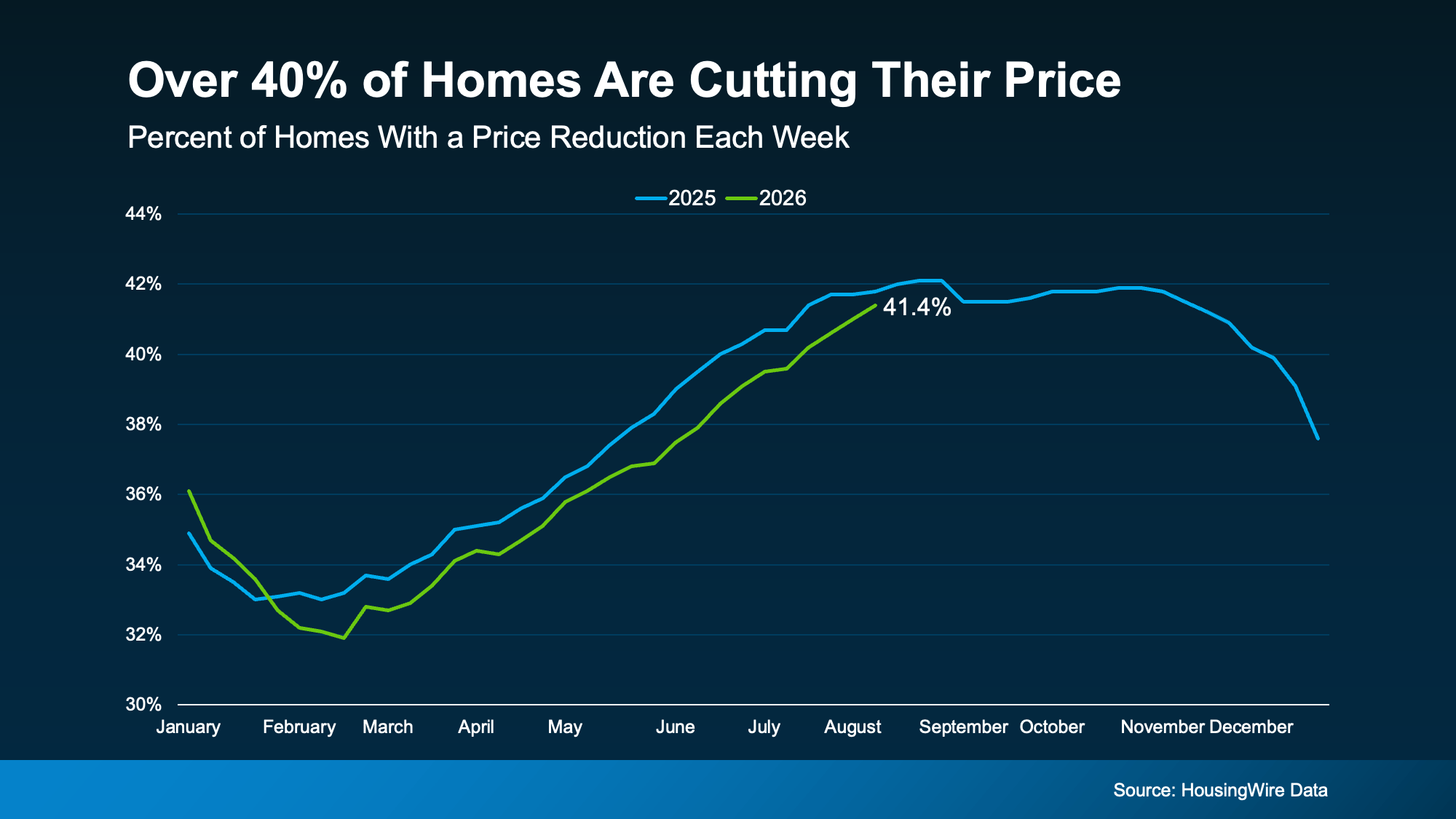
One of the clearest signs sellers are adjusting? Price cuts. HousingWire Data shows more than 40% of sellers are dropping this price.

That’s just slightly behind the volume we saw last year (see graph below):
a graph of a price reduction

That’s more than 4 out of every 10 homes listed. Think about what that means. That's thousands of sellers deciding they'd rather lower their asking price than keep waiting for someone willing to stretch their budget. 

They know that to sell, they have to be willing to do some give and take. And when no buyers are biting, they’re pulling their biggest lever to draw buyers back in – their price. As Danielle Hale, Chief Economist at Realtor.com, explains:

"This is a market where people are adjusting and showing up rather than giving up. Sellers are meeting the market with more realistic asking prices, which is helping deals get done."

This July Saw the Lowest Median List Price for Any July in Five Years

What about the other 6 in 10 sellers? A lot of them started with a lower asking price to begin with rather than test the higher price and get crickets from buyers.

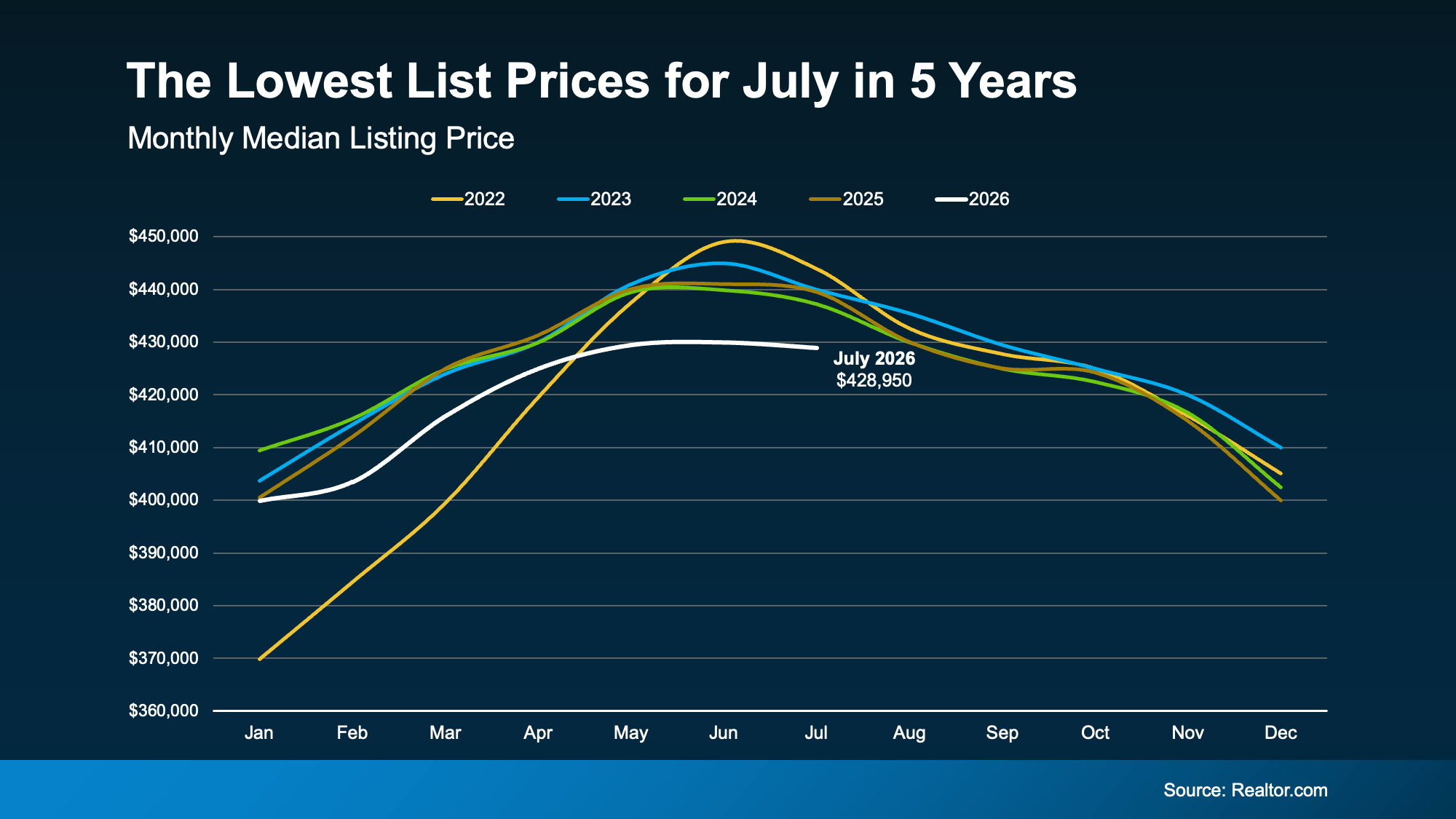
That may be why July 2026 had the lowest median list price of any July in the past five years, according to Realtor.com (see the white line in the graph below):
a graph of sales and prices

Now, that doesn't mean home values are falling or that everything's suddenly a steal. Prices are still above where they were before the pandemic. But what it does mean is this.

Sellers no longer banking on bidding wars or expecting buyers to pay whatever they ask. Instead, many are listing at prices that better reflect today's market from the very beginning. 

And honestly, whether they're pricing competitively from day one or adjusting after a few weeks on the market, the message for you is the same:

Sellers are more willing to meet you where you’re at.

Because in many markets throughout the country, you're not fighting over a house anymore. Sellers are fighting over you. And that’s information you can use to get a better deal.

Yes, affordability can be a real challenge. And the monthly payment you take on definitely does matter. But if you've been assuming everything is out of budget, there may be more wiggle room than you think.

Bottom Line

Right now, sellers are flexible on the price in ways they weren't before. Let’s take advantage of that flexibility.

You may be surprised by what's available – and how willing today's sellers are to work with buyers.

Aug. 29, 2026

Fayette County Property Reappraisal 2026: Oakland's Guide

Posted in Blog history
Aug. 28, 2026

Choosing a Neighborhood in Oakland TN: A Buyer's Q&A

Posted in Blog history
Aug. 26, 2026

One Number Could Change Everything About Your Next Move

One Number Could Change Everything About Your Next Move


When's the last time someone told you what your house is worth? Not what some online valuation tool guessed. Not what your neighbor's house sold for. What yours is actually worth right now.

For a lot of homeowners, it's been years. And if you've been thinking about moving, but higher home prices or mortgage rates have made you hesitate, here’s why it’s time to take a second look at that number.

Your House May Be Worth More Than You Think

Home values have climbed significantly over the past 5-10 years. And even though today's market is more balanced, homeowners are building wealth every day just by owning their homes. That’s how equity works. As home values rise, and as you make your monthly payments, your equity grows. And it adds up fast.

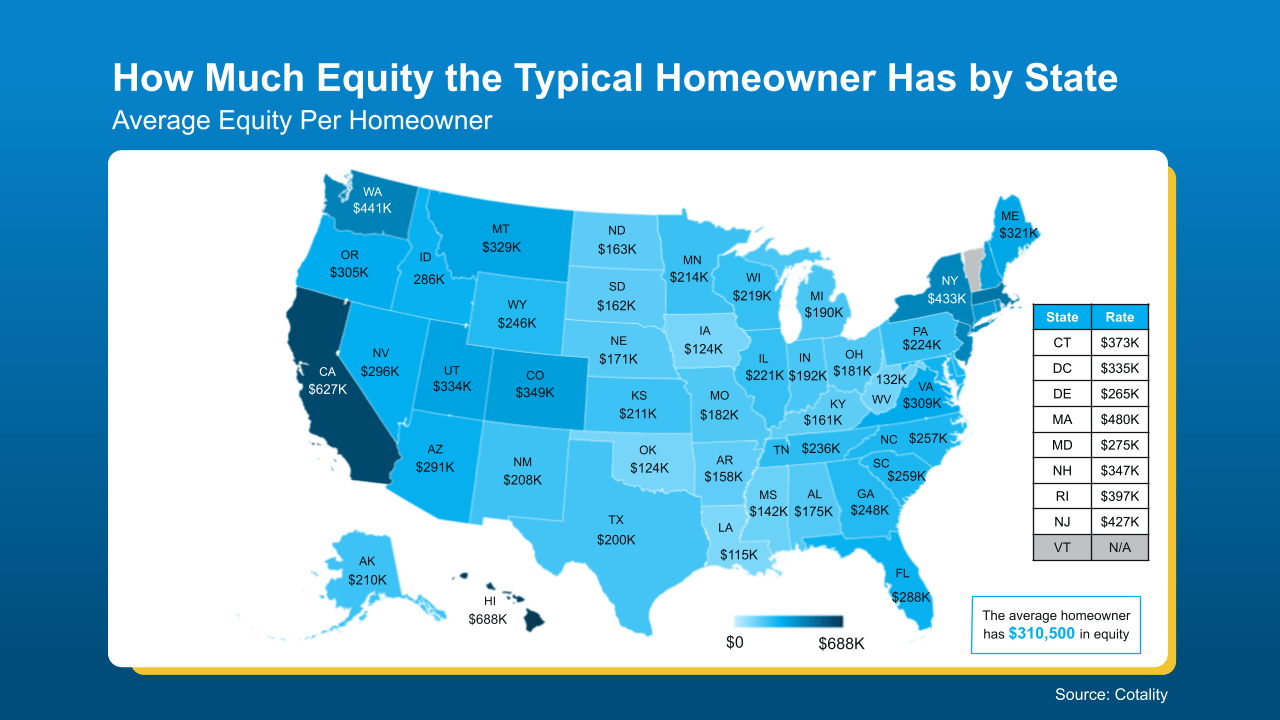
According to Cotality, the typical homeowner with a mortgage now has $310,500 in equity. That's not a small number. It’s six figures.

And that’s only the national average. In many states, homeowners have built even more equity than that. Take a look at the map below and see where your state stands. The darker the blue, the more equity the typical homeowner has there (see map below):

a map of the united statesEven though every local market is different, the question you should be asking right now is the same: How much equity have you built up?


Because if you don’t know that number, you’re missing out.

This Could Be the Missing Piece in Your Move

Most people assume that because prices are higher and rates aren't at 3% anymore, moving just isn't realistic right now, especially if they already have an ultra-low rate. And that's understandable – those are real factors.

But they're not the only factors.

When you have that much equity in your house, you're not starting from scratch. You're not scraping together a down payment or hoping the numbers work. You're walking into your next move with more of an advantage than you think. And that changes the math. 

What Your Equity Can Do for You

Maybe you've outgrown your current house or you're ready to downsize… The equity you've built could help bridge the gap between where you are today and where you want to be next.

Yes, your next house may cost more than your last one did. But your equity could cover a big chunk of that difference. Depending on how much you've built, it could help you:

  • Lower your monthly payment on your next home. The bigger your down payment on your next place, the less you have to borrow. And with today's rates, borrowing less can make a big difference in what you pay every month. 

  • Buy your next house with all cash. This surprises a lot of people, but some homeowners have built enough equity to buy their next home outright, in cash. According to the National Association of Realtors, more than one-quarter (26%) of repeat buyers paid all cash for their home in July. 

  • Transform the home you already have. Love your neighborhood but not your floor plan? You don’t have to move. Your equity could help fund renovations that make your home fit your life today while potentially adding value for tomorrow.

Your equity doesn't erase the challenges of the current market. But it does mean you're walking into your next move with a lot more power and flexibility than you think.

That’s why the value of your home isn't something you should have to wonder about. 

If you're even thinking about a move – or if you're just curious what your options might be – the smartest thing you can do is get a Professional Equity Assessment. It’ll give you a real, market-based evaluation of what your house is really worth right now and how much equity you’re working with.

Because once you see the number, maybe it’s not about whether you can afford to move – it's about what kind of move makes sense for you.

Bottom Line

If it's been a while since you've gotten a professional look at your home's value, let's change that. 

Reach out for a free, personalized Home Equity Assessment that estimates what your house could sell for, how much equity you've likely built, and what that could mean for your next move.


Aug. 25, 2026

Most Home Sales Close – Here’s How To Keep Yours on Track

Most Home Sales Close – Here’s How To Keep Yours on Track


Few things are as rattling as the thought of your home sale falling through at the last minute, right before closing. All that waiting, all that progress, out the window.

But if you’re getting ready to sell, here’s what you should know. Even in today’s market, it rarely comes to that. Buyers who are moving at today’s rates and prices are generally moving because of some big life change. That means they’re motivated, and eager to get all the way to the closing table.

According to the latest data from Redfin, only about 1 in 7 pending sales are falling through. Meaning the vast majority make it all the way to closing.

And the single biggest thing that puts a deal at risk is the one you have the most power to prevent. It just takes a little smart planning before your house hits the market.

Why Some Deals Fall Apart Before Closing

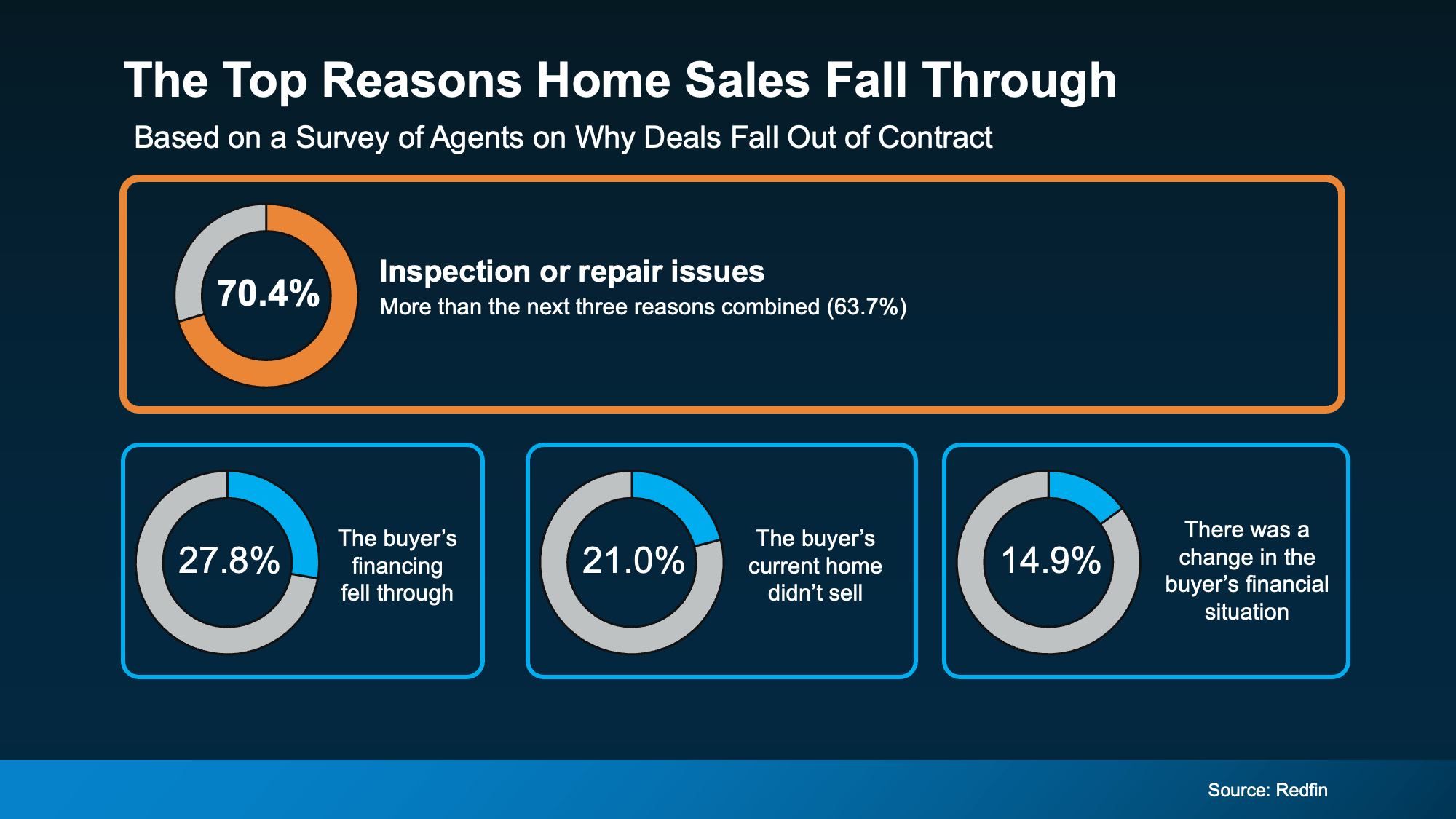
A Redfin survey sheds light on the most common things that trip up a sale (see visual below):

a blue and orange chart with text

Here’s a bit more information on each one.

  • Inspection or repair issues. This is the big one. When a buyer’s inspector finds a problem, whether with the roof, the plumbing, the foundation, or elsewhere, the buyer can push back, ask you to make repairs, request a credit so they can do it themselves, or see if you’ll lower your price. If they don’t get what they want, they may walk away from the deal altogether.

  • The buyer’s financing fell through. Their mortgage loan has to be fully approved in time for closing day. If the loan doesn’t come together, the sale can’t move forward. 

  • The buyer’s current house didn’t sell. Some buyers need to sell their own home before they can close on yours. If that takes longer than expected, you may run into some issues with your timeline or even see them give up on their move.

  • There was a change in buyer’s financial situation. A new job, a big purchase, or new debt can change what a buyer qualifies for on their mortgage loan, even after they were pre-approved.

Where Your Agent Makes the Difference

Some of those reasons are outside your control, like whether a buyer’s loan clears or whether they sell their own home in time. But according to Zillow, there are a few proactive things you can do to help make sure your sale goes as smoothly as possible:

  • Save yourself the headache and get a pre-listing inspection. That’s when you get your own inspection before a buyer gets theirs. It lets you find the big issues before a buyer’s inspector does, so you can fix them or disclose them on your terms, instead of scrambling once you're under contract. In this situation, your agent will help you decide what's worth addressing and what to just disclose. Handle it now, and the biggest risk to your sale is behind you before a buyer ever brings it up.

  • Look at more than just the offer price. Your agent will help you weigh the whole offer, including the buyer’s timeline and any contingencies attached. When a buyer’s offer depends on selling their own home first, the success of your sale rides on a second deal you can’t see. Sometimes, a slightly lower offer with fewer strings is the safer one. Your agent will help you weigh your options and make a plan that works well for you. 

One of those is something you can’t do until you have offers in hand, but the other is something you can get ahead of right now. The pre-listing inspection.

That relatively small cost upfront can save you the much bigger hassle of a deal falling apart later. And while getting your own inspection before listing may not make sense in every market, your agent can tell you whether it’s worth it based on your market, your house, and what buyers are prioritizing in your area.

Sometimes the smartest move is staying one step ahead.

Bottom Line

Most home sales still close, and the biggest thing that could get in the way of yours is the one thing you can actually do something about.

With the right prep, your sale has every reason to make it to the finish. So, let’s connect and get your house sold. 

Aug. 23, 2026

Oakland, TN Draws Out-of-State Buyers: A Fall Snapshot

Posted in Blog history
Aug. 21, 2026

Oakland TN Closing Costs Breakdown for August 2026 Buyers

Posted in Blog history
Aug. 19, 2026

Who Has the Upper Hand in Today's Housing Market?

Who Has the Upper Hand in Today's Housing Market?


Ask around and almost every homebuyer out there wants to know if there’s a way to get a better deal. And just about every seller wants to know if they'll still get top dollar.

The interesting thing is... both can be right at the exact same time. It just depends on where you live.

That's because today's housing market isn't moving in one direction anymore. Some markets clearly favor buyers. Others still favor sellers. But most are sitting somewhere in the middle.

And knowing which market you're actually in can completely change the strategy you use to buy or sell (and what expectations you should have). Let’s break it down.

One Number Tells You Who's Got Leverage

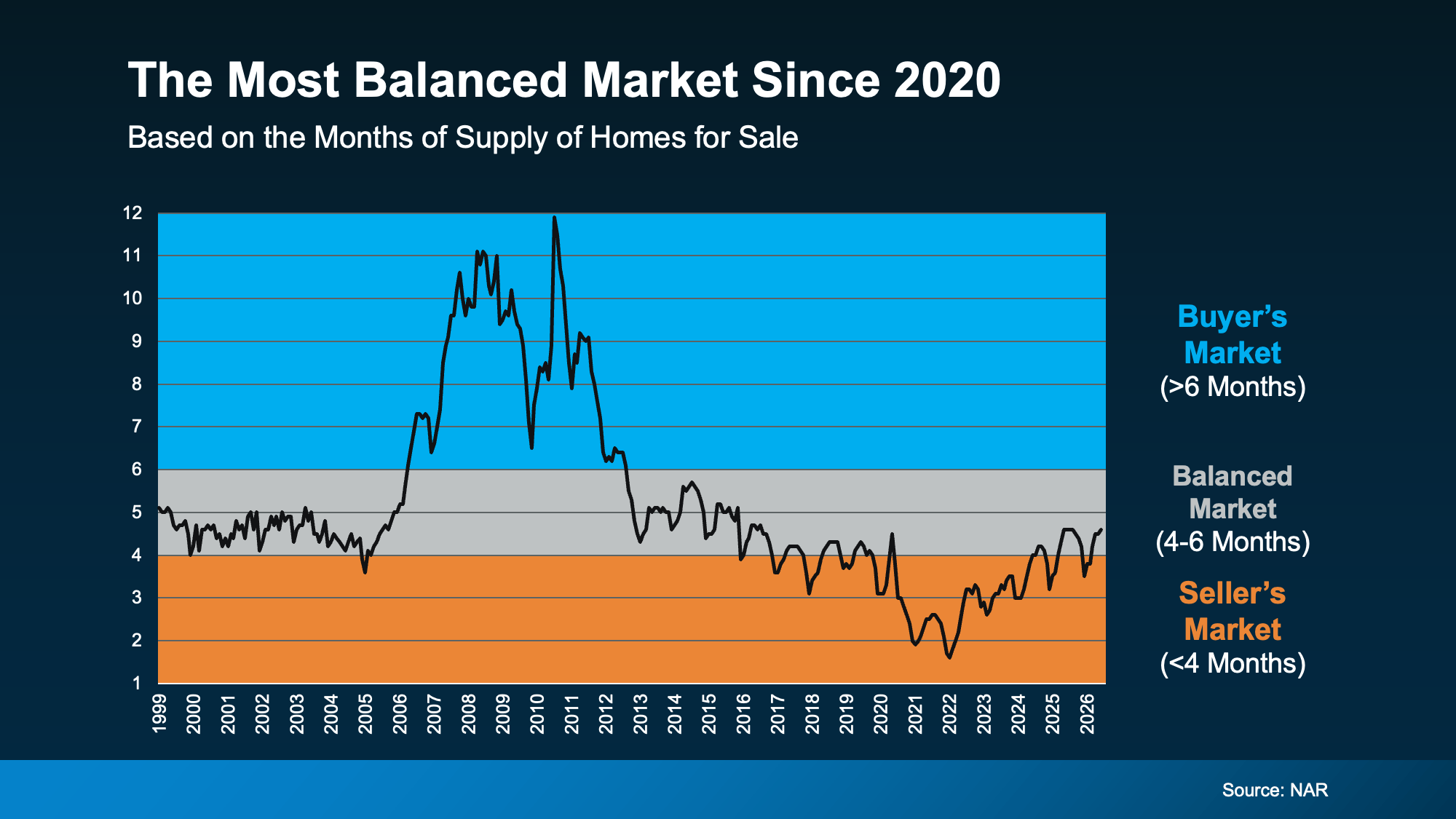
So how do you know which market you're in? There's one number that tells the story faster than anything else: the months' supply of homes for sale. It's the clearest signal of who's got leverage – and what strategy you'll need. Think of it like this.

Imagine no additional homes were listed starting today. Months' supply tells us how long it would take to sell everything that's currently on the market based on today’s demand. 

Generally speaking, if months’ supply is:

  • Fewer than 4 months: Sellers usually have the advantage.

  • 4 to 6 months: Buyers and sellers are on more equal footing.

  • More than 6 months: Buyers can usually negotiate for a better deal.

Right now, the National Association of Realtors (NAR) data says that number is 4.6 and that puts the overall market back in balanced territory (see graph below):

a graph of a market

That means, as a whole, the market has finally moved back into a much more balanced range after years of being tilted in sellers’ favor. While that may look like the scales have tipped only slightly, it’s enough to make a real difference in what strategy you’ll need for your move – at least in most places.

The Tale of Two Markets: Why 'Balanced' Doesn't Mean the Same Thing Everywhere

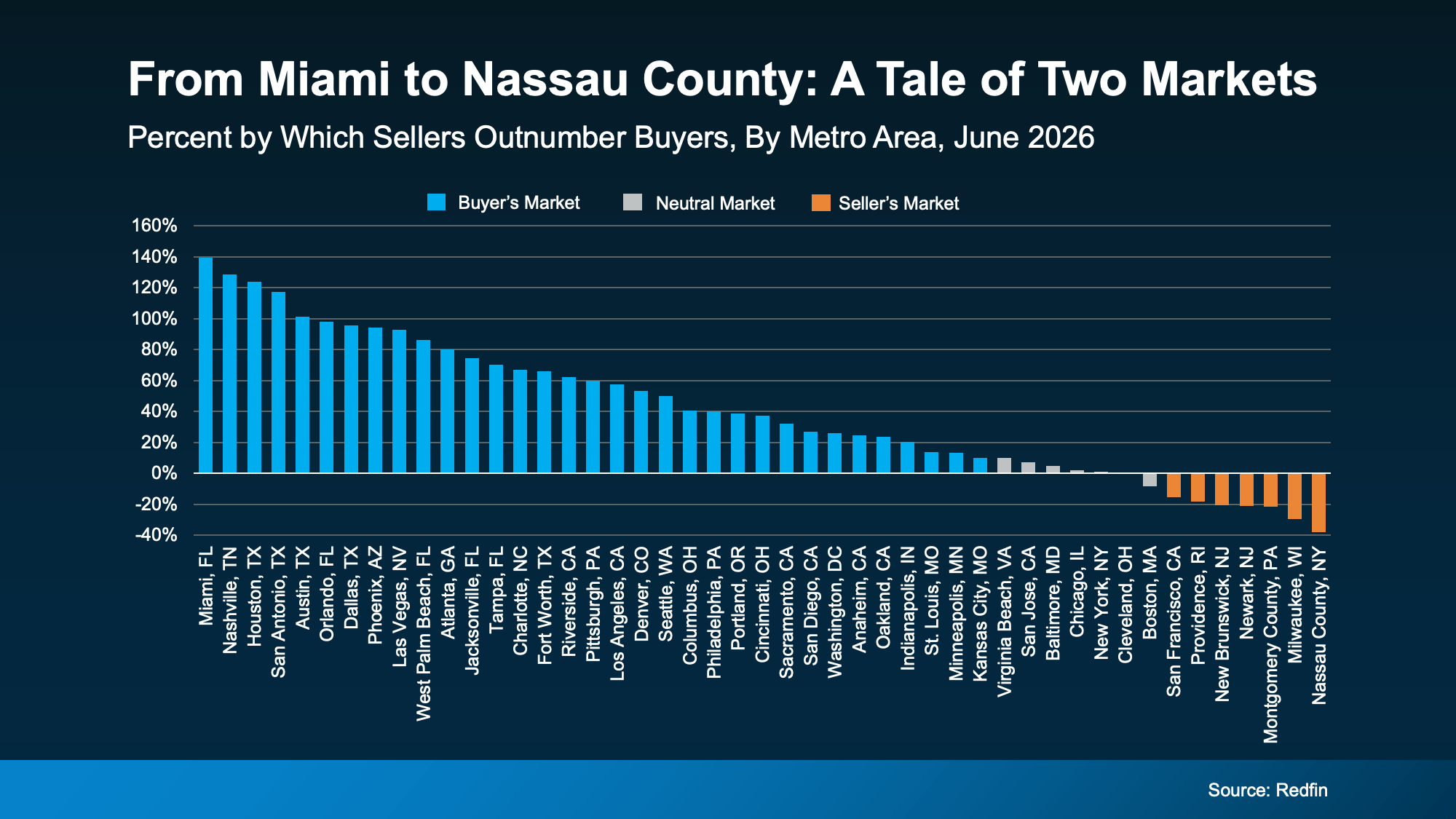
Redfin data helps shed some light on how this shakes out across the country. It breaks down which cities are leaning in either direction (see graph below).

  • Some markets give buyers more leverage. Those are in blue.

  • Some still favor sellers. That’s the orange.

  • Others fall somewhere in between. Those are gray. 

a graph of a marketNotice anything? A lot more places are seeing more buyer-friendly conditions right now.  In fact, this is the most buyer-friendly market we’ve seen in nearly 6 years.

But don’t take that as buyers have the upper hand everywhere.

There are still cities where sellers still have the power. And if you're in one of them, your approach to selling or buying looks completely different than it would in a buyer-leaning market.

The Biggest Mistake You Can Make Right Now

That’s why the biggest mistake isn't thinking it's finally a buyer's market. And it isn't thinking it's still a seller's market either. It's making any assumption without talking to an expert agent first.

Today’s market is incredibly local. In one market, a buyer may be getting thousands of dollars in concessions from a seller. And a homeowner may have to consider dropping their price.  

But in another, a buyer may be stressed about coming in with their best offer, or they may lose out on the home to another buyer. And a seller may still be seeing strong demand and prices inching higher.

Same overall housing market.

Very different experiences.

The truth is what’s happening in your back yard affects everything from pricing your house to making an offer to negotiating repairs or concessions. And that’s why an agent’s local knowledge matters more now than ever before.

Your plan has to be based on your neighborhood – and only an agent has the expertise to get that right.

Bottom Line

This market isn’t one-size-fits-all.

If you're wondering who has the upper hand where we live, let's talk. I'll show you exactly what the numbers look like in our market – and what strategy gives you the best shot at getting what you want.

Aug. 18, 2026

The Kind of House Buyers Are Willing To Pay More For

The Kind of House Buyers Are Willing To Pay More For


That spare room on the main floor. The finished basement with a kitchenette and its own entrance. The bonus room you've been using for storage.

To you, it's extra space. But to a growing pool of buyers, it's the reason they'd pick your house. Here’s why. Multi-generational homebuying is on the rise.

Millions of Families Are Living Multi-Generationally

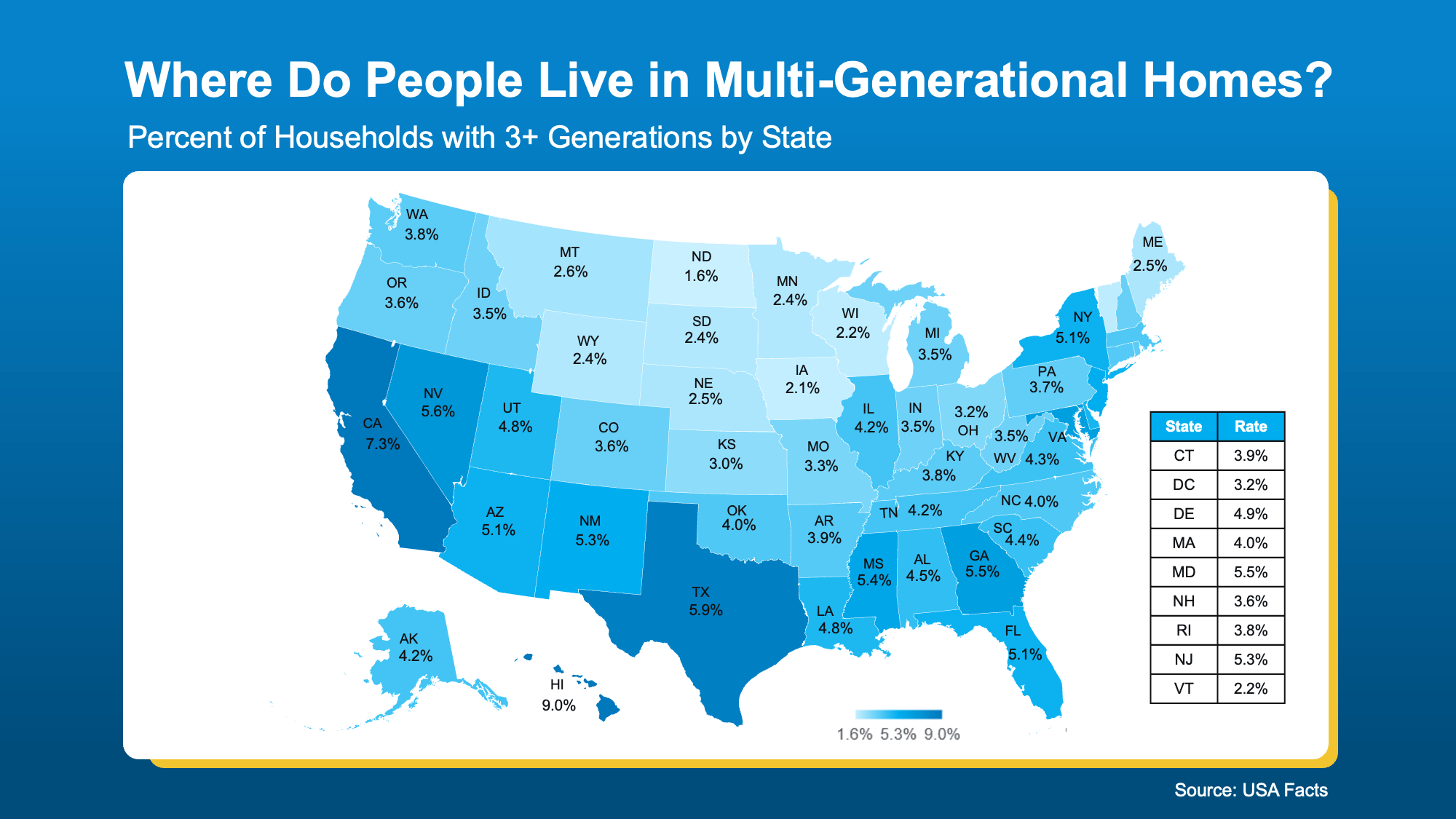
The number of multi-generational households is climbing. That’s when 3 or more generations live under one roof. And data shows those households grew from 3.2 million to almost 4 million between 2014 and 2024, according to Realtor.com.

And each year, more people are shopping for a larger home that fits their combined needs.

While the appetite for this type of house is rising across the board, data from USAFacts shows multi-generational living is more common in some states than others. The darker the state in the map below, the more common it is in that area (see map below):

a map of the united states

Where does your state fall? Depending on where you are, the pool of buyers looking for a house like yours could be even bigger than you’d think. But the overall bottom line is this.

There’s a real market out there for larger homes with room for multiple generations under one roof, especially since affordability is still so tight. And if you own a house like that, it’s in demand.

Multi-Generational Houses Sell at a Premium

And that extra room carries real value with the right buyer. According to Realtor.com, in 2025 the median asking price for a multi-generational house was $709,000 – roughly 65% higher than the $429,900 median for a standard house.

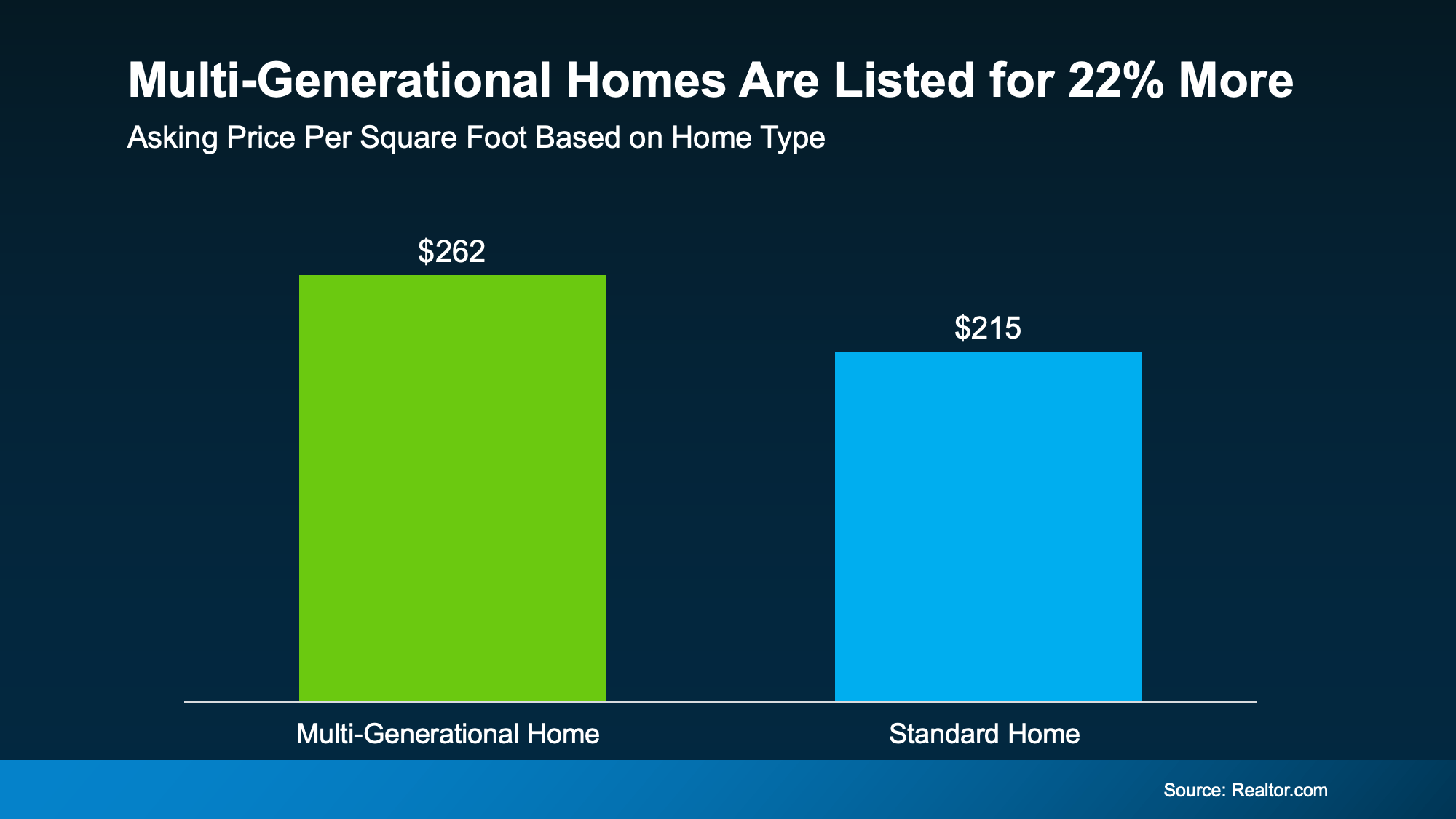
Some of that is simply size. But compare multi-generational homes to regular homes with the same amount of square footage, and they still come out on top – $262 per square foot versus $215.

That’s a 22% premium you could command for special features like in-law suites, second kitchens, and separate entries (see graph below):

a graph of a home sales

When you sell, this could help you walk away with more money in your pocket, especially when your agent highlights your home’s multi-generational-friendly features in your listing.

And Buyers Aren’t Getting Sticker Shock

And even with slightly higher price tags, buyers aren't flinching. Multi-generational houses drew 13.5% more online views than standard ones, and they still sold just as fast – in about 59 days – per the same Realtor.com report.

Hannah Jones, Senior Economic Research Analyst at Realtor.com, explains:

"The strong demand and steep premiums we are seeing in inventory-constrained markets point to a real mismatch between what buyers are looking for and what is actually available. For sellers in these markets, this type of home can be a significant asset."

Basically, when buyers want something that's very specific, the house that checks the box tends to stand out.

Bottom Line

Your multi-generational-friendly, or simply larger-than-average, house might meet criteria a lot of buyers can't find in a standard one. That's what gets attention. And offers. So, let’s chat about what it could get you in our market right now.

Aug. 16, 2026

Oakland TN Buyer Timelines Now Run on the School Calendar

Posted in Blog history