Share this with your friends


901-465-7172
Real Estate Company
Find Your Place in the Mid-South
Real Estate & Community News

Oct. 4, 2026
Before You Close in Bartlett: 6 Inspection Issues to Catch
Posted in
Buying a Home
no comments yet
Oct. 1, 2026
What Higher Mortgage Rates Mean for Home Sellers
What Higher Mortgage Rates Mean for Home Sellers
Higher mortgage rates don't just affect buyers. They can change what it takes to sell your house, too.
That's because today's buyers are paying close attention to affordability. And when rates rise, even a relatively small change can make a noticeable difference in their monthly payment. So, they're looking for ways to make the numbers work. And in some markets, new construction is giving them exactly that.
If you're planning to sell, that doesn't mean you can't compete. But it does mean you need to understand what builders are doing to win over buyers – and what options you have, too.
Builders Are Competing on the Monthly Payment
New construction has something interesting going for it right now. While existing-home sales (homes that have previously been lived in) continue to struggle under the weight of higher mortgage rates, new-home sales are holding up a bit better.
In a recent interview, Logan Mohtashami, Chief Economist at HousingWire explains new-home sales are at an 8-month high and are now running around 2019 levels. On the flip side, existing home sales are lagging behind and fall about 1 million home sales short of 2019 levels.
One big reason builders have been able to navigate higher rates differently is incentives. According to Realtor.com, nearly 1 in 5 (18.8%) newly built homes come with some kind of buyer incentive advertised up front:
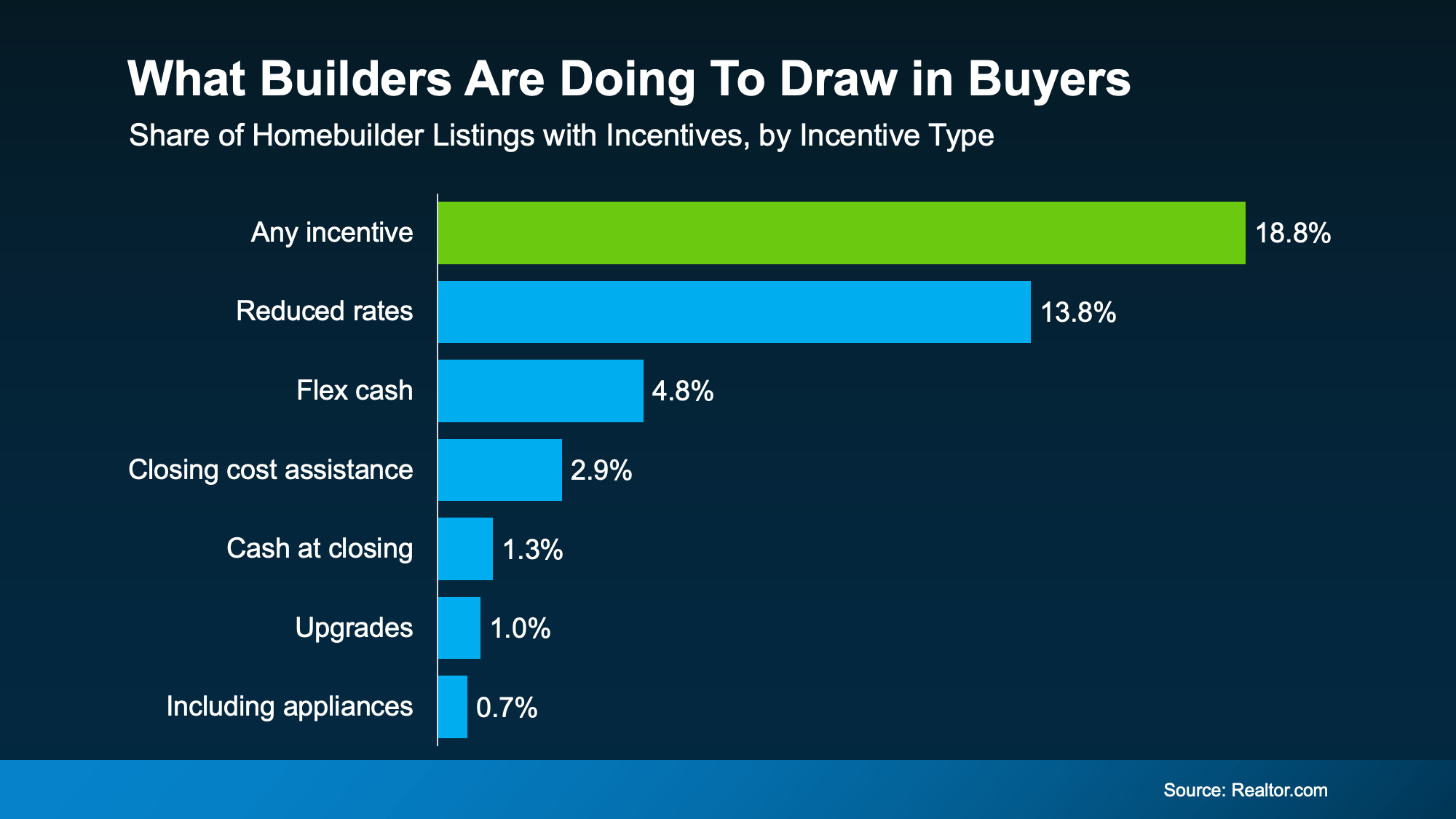
The most common may surprise you. As the graph shows, many builders are offering reduced rates, sometimes through something called a mortgage rate buydown.
It’s essentially where they pay upfront costs to help buyers get a lower rate, and by extension, a lower monthly payment. It has obvious draws for buyers. For homebuilders, it helps them get their houses sold. So, a lot of builders see it as a win-win. That’s why reduced rates are a part of 13.8% of new home listings.
In some cases, builders are offering rates below 6%, maybe even far below 6%. And that can help buyers shave hundreds off their monthly payment. That's a big difference to a buyer who are feeling the pinch right now.
So, How Can Sellers Like You Compete?
First, don't assume a mortgage rate buydown is something only a builder can offer. Sellers can contribute toward a buyer's rate buydown too, depending on the loan and transaction. Does that mean you should offer one? Or that you have to if you want to compete? Not necessarily.
A buydown is just one possible lever. Depending on your market and the buyer, it may make more sense to negotiate on price, contribute toward your buyer’s closing costs, make repairs, or make sure your house stands out in ways a new build can't. That's why working with an agent who knows your local competition matters. Joel Berner, Senior Economist at Realtor.com, says:
“Sellers of existing homes are facing a lot of competition from the new-home space. . . so sellers should highlight the local amenities of their neighborhoods in contrast to the more suburban or exurban communities where many new homes are built.”
A great agent will do this naturally anyways. Knowing what makes your house different and showcasing that in your listing can help your house stand out. And remember, being open to making a few compromises or throwing in some concessions can make a bigger difference for buyers than you may think.
Today's Market Rewards Sellers Who Adapt
Builders have also been quicker to adjust their prices based on what buyers can actually afford and where demand is. That's putting pressure on the resale market in some areas. Robert Dietz, Chief Economist at the National Association of Home Builders (NAHB), explains:
“. . . existing homeowners now have to do the price discovery that builders have been doing since 2022.”
That's an important message if you're hoping to sell.
You don't automatically need to slash your price or offer a big concession. But you do need to price and market your house based on what buyers can pay today – not what sellers could get a few years ago.
And remember, this varies tremendously by location. New construction represents a much bigger share of the competition in some markets than others, and builder incentives aren't equally common everywhere. So, lean on an agent to see how big of a factor builders are in your area.
Bottom Line
Higher mortgage rates are making buyers more cost-conscious. Builders know that, and many are responding with reduced rate, closing-cost help, price reductions, and other incentives.
If you're thinking about selling, let's look at what buyers are getting from other homes in our area – including new construction – and make sure your house is positioned to compete.
Sept. 22, 2026
Data Centers Are Moving Closer to Homes. What Does That Mean for You?
Data Centers Are Moving Closer to Homes. What Does That Mean for You?
Data centers probably weren't on your list of things to think about when buying or selling a home.
School districts? Sure. How close you are to family? Absolutely. A large building full of computer servers down the road? Probably not.
But that may be changing.
Data centers are popping up in more communities across the country. And as they do, buyers and homeowners are starting to wonder what having one nearby could mean for everything from home values to utility bills. So, let's get into what the data actually says. Because there's a lot more nuance here than if they’re “good” or “bad.”
Data Centers Are Showing Up in a Lot More ZIP Codes
According to Realtor.com, back in 2015, only about a dozen ZIP codes had a large data center. But by the first half of 2026, that number had climbed to more than 100 – and it's projected to rise even further by the end of the year (see graph below):
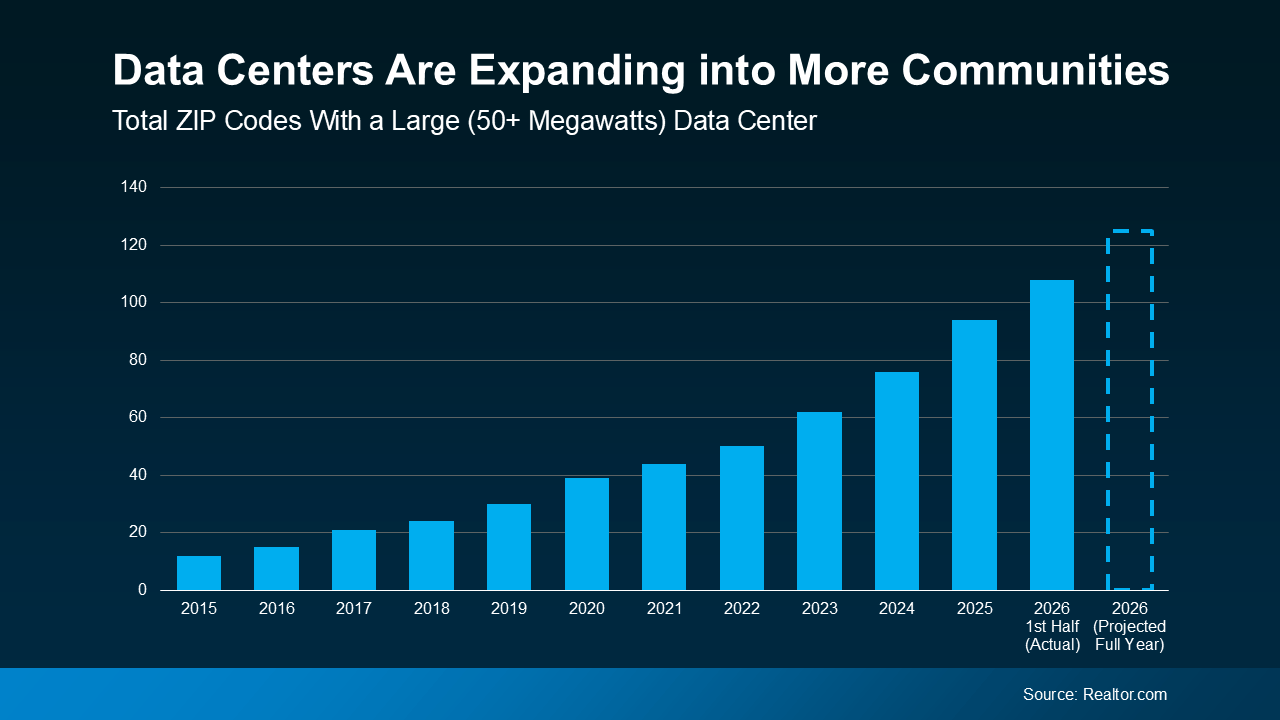 That's a pretty dramatic increase in just over a decade. HousingWire shows a lot of that growth is in Texas, Virginia, Georgia, Pennsylvania, Ohio, Utah, Illinois, Arizona, Indiana, and Nevada.
And that ramp up explains why this is becoming a real estate conversation. More buyers are going to encounter a data center during their search. More homeowners are going to hear about one being proposed nearby.
And both groups are going to want to know what that could mean for them.
The Big Question: What About Home Values?
One of the first concerns homeowners and buyers may have is: could a nearby data center hurt home values? So far, there’s no evidence that says it automatically will.
Researchers compared communities that have large data centers to similar communities without them. A recent HousingWire article reports:
“. . . home values in data center ZIP codes generally tracked their matched communities — with no statistically meaningful gains or losses. Listing prices showed a modest initial increase around openings . . .”
That's important context. Historically, simply having a data center nearby hasn’t been enough to send home values dramatically higher or lower.
That doesn’t mean every property will react the same way. Proximity, the surrounding development, and the specific facility can all matter. But for the typical homeowner or buyer, the data so far doesn’t point to an automatic impact on home values.
Living Near a Data Center Can Come with Tradeoffs
Like any major development coming to town, data centers can bring benefits along with things buyers and homeowners will want to consider.
On the plus side:
-
They may be part of a bigger growth story. A data center can usher in broader development in an area and substantial property tax revenue that can be used to improve the community.
-
Infrastructure may get an upgrade. New roads, fiber, power infrastructure, and other improvements can come along with major development.
-
They can generate economic activity. A data center can generate jobs which in turn fuels local housing demand and supports local businesses.
On the flip side:
-
They're not exactly invisible. Large facilities, transmission lines, substations, and construction can change the look and feel of an area.
-
Noise can matter. Cooling equipment, generators, construction, and truck traffic may be noticeable depending on how close you are.
-
They use more resources. These facilities can require significant electricity and, depending on the cooling system, water. That can raise questions about local infrastructure and whether growing electricity demand could affect what residents pay.
On that last point, J.P. Blackwood, Public Affairs Liaison and Media Spokesperson for the Ohio Consumers’ Counsel (OCC), explained his take on what consumers need to know about data centers and their potential to impact utility costs to HousingWire:
“Utility rate increases tend to be gradual, and so that’s what I would expect here. Again, a number of factors can drive electricity prices higher and are driving them higher, and this is one of them. There are steps being taken around the country to mitigate the effects of data centers.”
Basically, they’re just one factor that can have an impact. And the key word there is “can” because it depends on where you live and what rules are in place in your area.
So, What Should Buyers and Homeowners Do?
If you’re buying, find out what’s already there – and what’s approved or proposed nearby. Consider the facility’s proximity, potential noise, future development, and whether utility costs are something you want to factor into your budget.
If you’re selling, don’t assume a nearby data center automatically hurts your home’s value. But buyers may have questions. Knowing the facts about the facility, construction timeline, noise, and future plans can help you address those concerns upfront.
Bottom Line
As more data centers pop up, they're becoming another piece of the puzzle buyers and homeowners need to understand.
Have a data center nearby or one coming soon? Let’s talk about what it could mean for your home or your next move.
Sept. 21, 2026
3 Things You Can Actually Control About Your Mortgage Rate Right Now
3 Things You Can Actually Control About Your Mortgage Rate Right Now

If you're trying to buy a home, affordability is probably what keeps you up at night. And as you watch mortgage rates tick up again lately, it’s fair to wonder if you should just hit pause and wait for them to go down.
For now, though, they’re headed the other way. Mortgage News Daily data shows how rates have risen this year (see graph below):
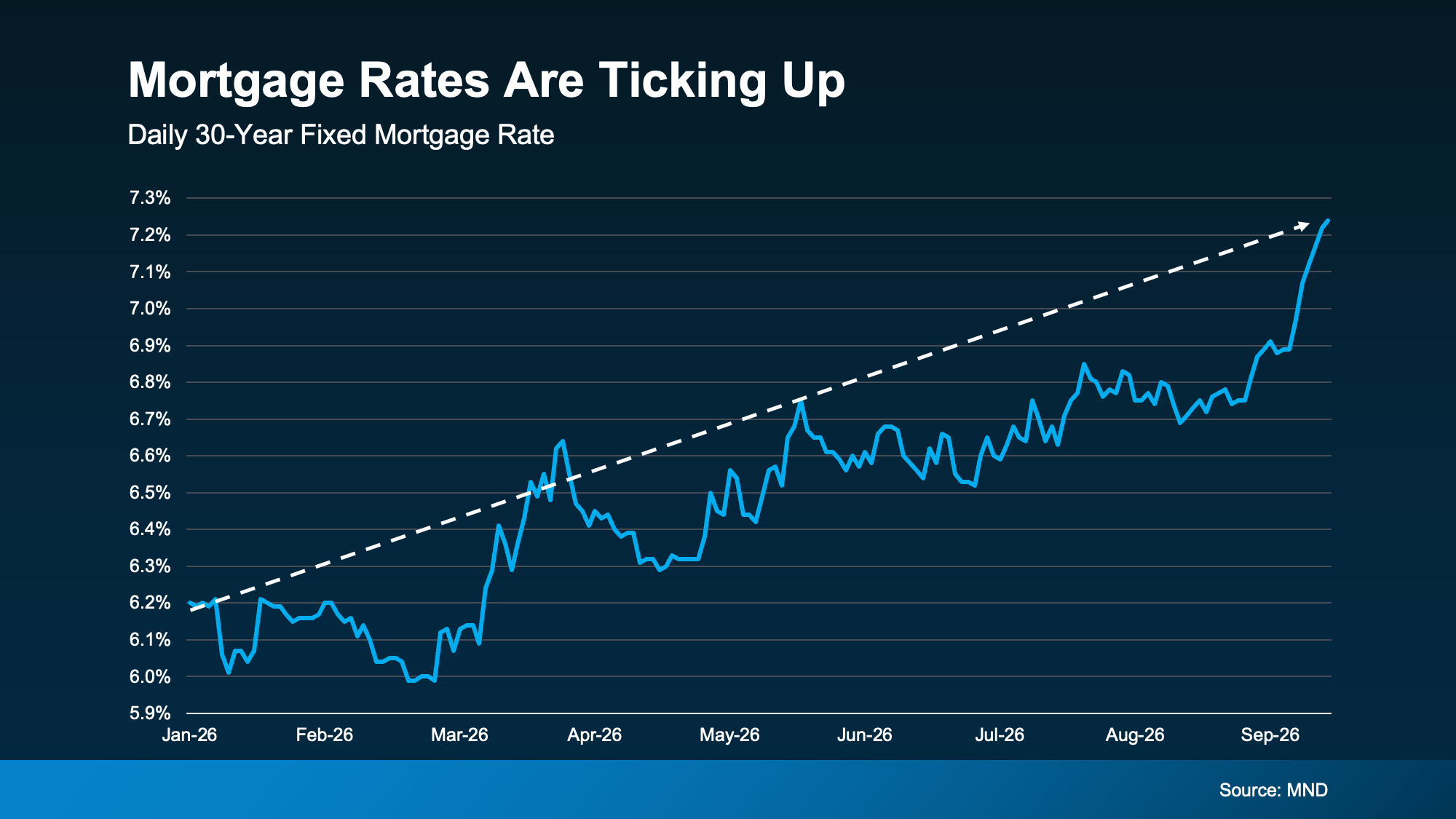
And if you’re wondering why? There are actually a number of reasons.
Mortgage rates are impacted by the situation overseas, economic data, inflation numbers, oil prices, and even decisions from the Federal Reserve (who recently decided to hike their Fed Funds Rate – which often affects mortgage rates too). As Danielle Hale, Chief Economist at Realtor.com, explains:
“The pressure on mortgage rates was here even before the Fed rate hike, and it doesn’t show signs of relenting. . .”
Now, that’s probably not what you wanted to hear. But, it doesn’t mean there’s nothing you can do. While you can't control where rates go from here, you absolutely can control several things that shape the rate you actually get.
So where should you focus? Let's walk through it.
Work on Your Credit Score
Your credit score plays a big role in the rate you qualify for, and even a small improvement can make a real difference in your monthly payment. As Freddie Mac puts it:
"Generally, the higher your credit score the more options will be available to you, including better loan terms and a lower interest rate."
So, make sure you do what you can to keep your credit score up. If you're not sure where your score stands right now, or how to improve it, talk to a trusted loan officer.
Explore Your Loan Options
The type and term of your loan both affect your rate. Conventional, FHA, VA, and USDA loans each come with their own requirements and rates, and your term (15, 20, or 30 years) changes both your payment and the total interest you'll pay. The structure matters, too. A fixed-rate loan holds the same rate over time, while an adjustable-rate loan usually starts lower and can move later on. Bankrate explains it this way:
". . . rates on fixed-rate loans are typically higher than introductory rates on adjustable-rate loans because the fixed-rate lender takes on the risk that rates could increase during the loan’s term. Likewise, government-backed FHA, VA and USDA loans sometimes have lower rates because they have a government guarantee or insurance that cuts the lender’s risk."
It’s important to explore your options with a lender to see what makes the most sense for you. Just be sure to balance your goals, your possible rate, and any potential tradeoffs before making any decision. You may even want to talk to multiple lenders to see how the options vary.
Consider a Newly Built Home
Another path to a lower rate comes down to the kind of home you buy. Many builders are buying down mortgage rates, which lowers your monthly payment. It’s just one way they’re trying to attract buyers and get their homes sold.
According to Realtor.com, buyers of newly built homes landed a lower average rate last quarter than buyers of existing homes (see graph below):
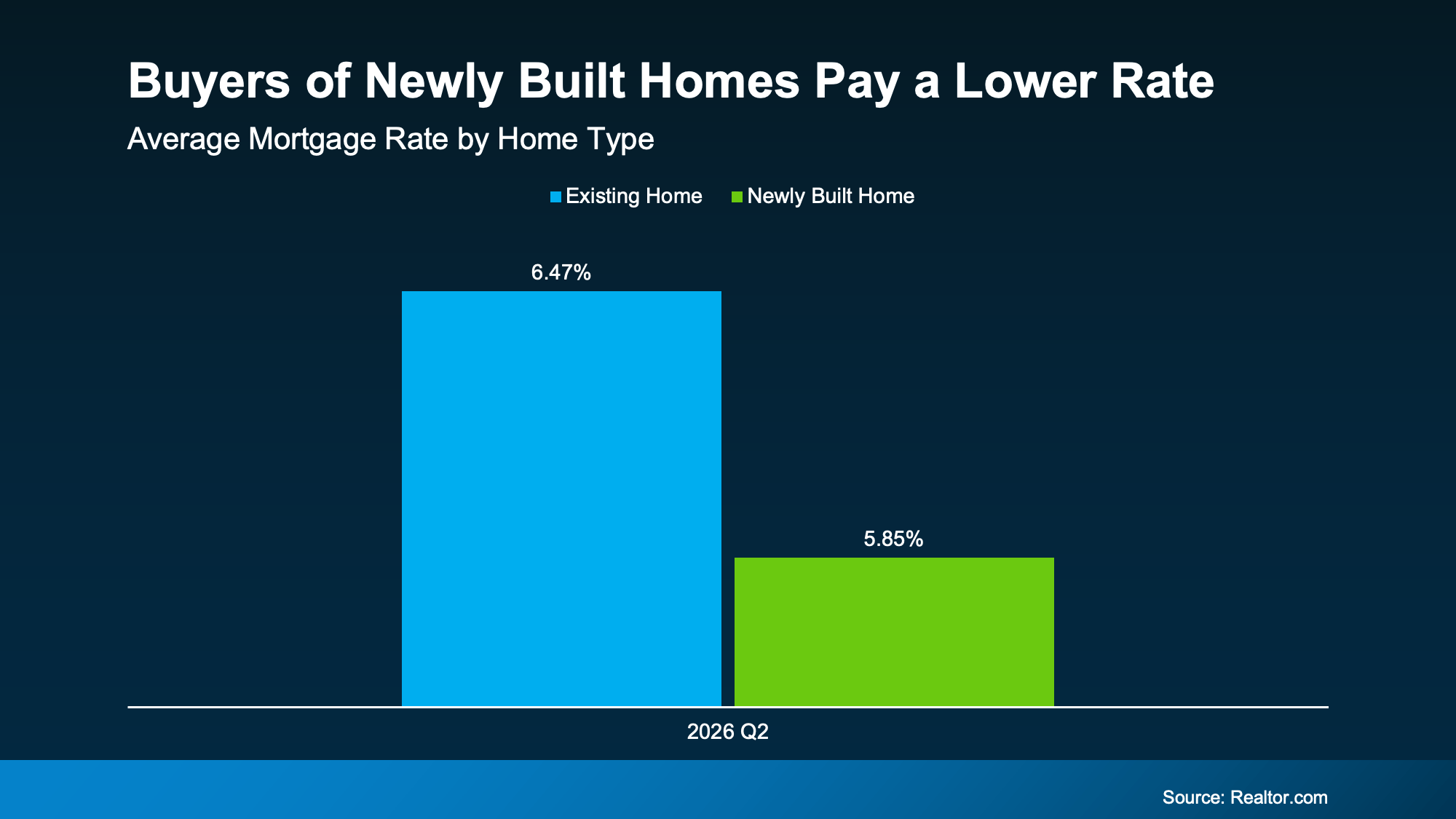
If a lower rate is your goal, it may be worth asking your agent to show you some new build communities that are offering this type of incentive locally.
Bottom Line
You can't control where mortgage rates go, but you can control your credit, your loan, and the kind of home you buy. Working with a trusted lender can help you lock in the best rate you qualify for. And when you’re ready to make a move that fits your budget, let’s connect.
Sept. 18, 2026
Selling This Fall? You Want To Get These 4 Things Right.
Selling This Fall? You Want To Get These 4 Things Right.

Selling your house this fall is absolutely doable. But there’s something you need to know about this time of year.
Buyer activity typically starts to slow while the number of homes for sale climb – and you need the right strategy to get attention in this type of market.
The good news? There’s a lot you can control.
From how you price and present your house to how you negotiate and respond to feedback. Here are four things you’ll want to get right this fall.
#1: Price To Get Buyers’ Attention
In the fall, there are typically fewer buyers looking and more homes for them to choose from. So, you want to make the most of every buyer who comes across your house.
And your price is one of the first things that can make them stop and take a closer look – or keep scrolling.
That’s why this isn’t the time to start high “just to see what happens.”
If buyers think your house is overpriced, they have plenty of other options to move on to. And that could leave you sitting and waiting.
So, if you want to sell before year-end, work with your agent to find the right price for your house and today’s market. That may mean listing at market value – or even slightly below it – to grab buyers’ attention.
Redfin explains how a seemingly small difference can change your buyer pool:
“Buyers often search in round-number price brackets, so pricing at $499,000 instead of $505,000 can make your home appear in more searches and feel like a better deal.”
#2: Make a Great First Impression
When buyers had very few homes to choose from, they were often more willing to overlook dated finishes or a house that needed some work. That’s harder to count on now.
With more choices, how your house looks online and in person can determine whether it makes a buyer’s shortlist at all.
That doesn’t mean you need a full renovation before you sell, but you should take care of essential repairs, do what you can to boost curb appeal, and make sure your house photographs well. Maybe that’s some light staging, maybe it’s swapping out faucets or lights, or maybe a fresh coat of paint. Small details can help a lot.
After all, you only get one chance to make that first impression. Make it count.
#3: Stay Open To Negotiating
Some sellers are still expecting the kind of leverage they had a few years ago. But in many markets, buyers have more negotiating power today and there’s a lot more give and take.
The latest data from Redfin shows 46.2% of sellers gave buyers some type of concession. So, consider throwing in a little help with closing costs or covering a repair. Almost half of sellers are.
The takeaway? Playing hard ball may not get you what you want. But being flexible might. The key is not getting so focused on “winning” every individual negotiation that you lose sight of the bigger goal: making your move happen.
Sometimes a small concession is what gets you to the closing table.
#4: Know When It’s Time To Adjust
Sometimes your house tells you when something isn’t working. Maybe you’re getting plenty of online views but very few showings. Or buyers are coming through, but you’re not getting offers. Or maybe buyer feedback has one recurring theme.
Pay attention to those signals. They can help you figure out what needs to change.
Let’s say your price is the most common point of feedback. Talk to your agent about a price drop. It doesn’t have to be a big change to make a big difference. The average price cut right now is 4% according to HousingWire Data. That’s normal.
Now, that doesn’t mean you should panic and slash your price after a week. It means you and your agent should pay attention to what buyers are telling you and adjust if you need to.
Sometimes the smartest move isn’t waiting for the right buyer. It’s making sure you’re giving that buyer a reason to act.
Bottom Line
Selling this fall is absolutely doable. And now you know four of the biggest things to get right.
If you want to sell before the end of the year, let’s make sure you have a winning strategy from day one.