
Share this with your friends


901-465-7172
Real Estate Company
Find Your Place in the Mid-South
Real Estate & Community News
June 23, 2026
Oakland TN Home Buying in Summer 2026: What June's Rate Picture and Rising Days-on-Market Mean for Fayette County Buyers
Posted in
Blog history
no comments yet
June 22, 2026
That House That’s Been Sitting Could Be Your Best Shot at a Deal
That House That’s Been Sitting Could Be Your Best Shot at a Deal
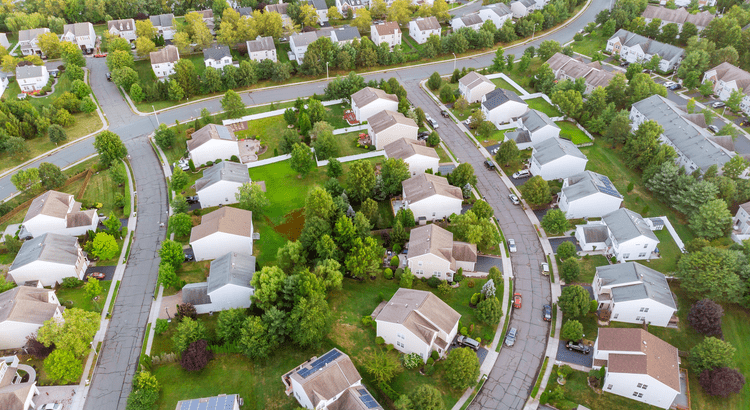
Open up a home search and you'll see them. Listings that have been on the market for two months. Three. Some longer.
Most buyers scroll right past them, assuming something’s wrong with the house. But that instinct could be costing you, since the longer a home sits, the more motivated the seller usually gets.
Where Some Buyers Are Finding Better Deals
If affordability has been your #1 hurdle to buying, here’s a surprisingly simple strategy that could help you finally get your foot in the door. Start with the homes that have been sitting the longest. That’s often where the best deals are.
Here’s why. Data from Realtor.com shows there’s a connection between longer time on the market and lower sales prices. Basically, the longer a house sits, the more likely it is that the seller will reduce the price (see graph below):
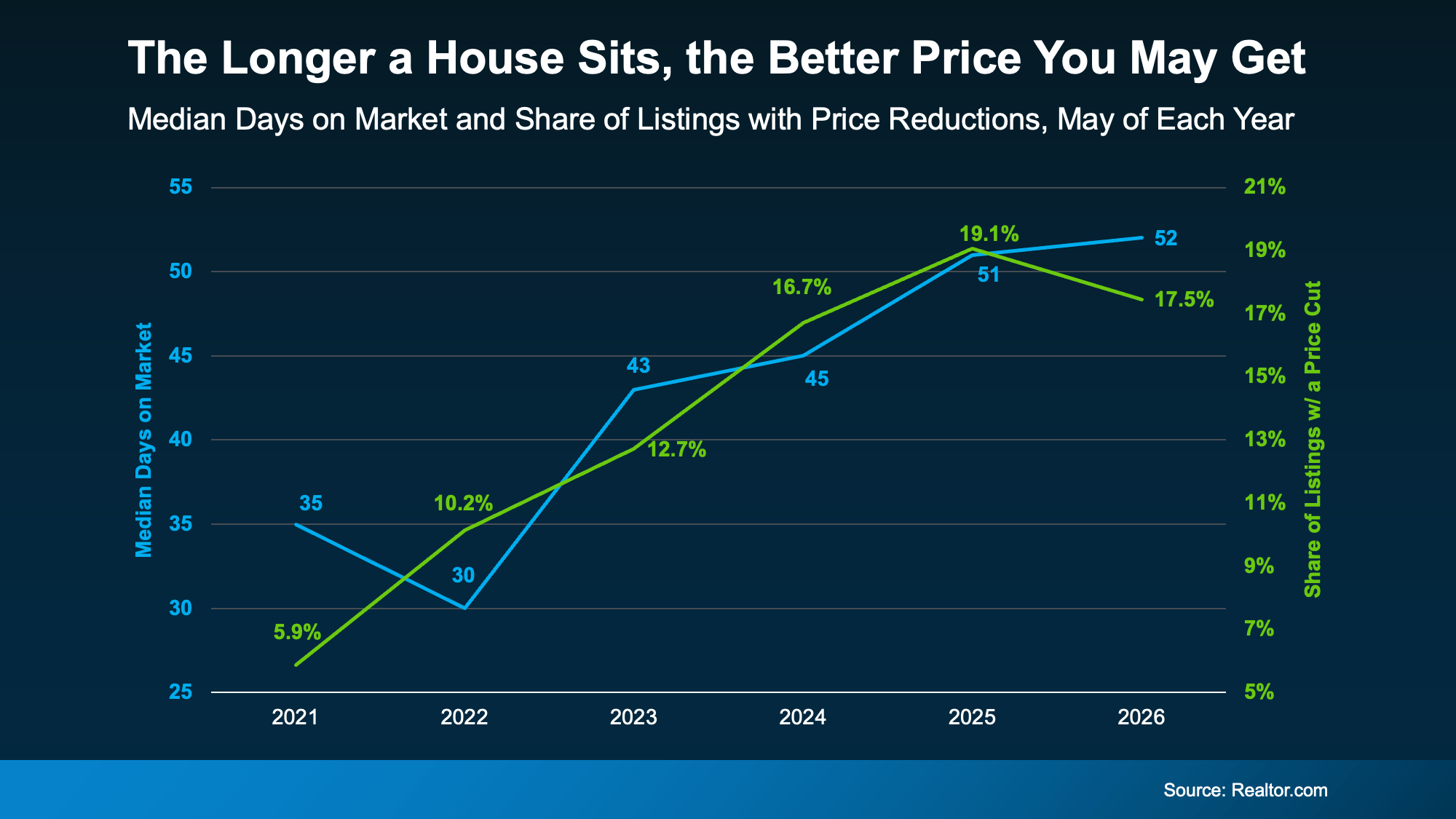
The blue line tracks how long homes stay on the market, while the green line tracks the share of homes getting a price reduction. As one climbs, so does the other.
And if you focus on these homes that are just sitting and waiting, the opportunity for you is bigger than you may think right now.
Redfin data shows there’s $347 billion worth of stale listings on the market right now – more than ever before for this time of year. So, ask your agent to filter listings for you from oldest to newest. The home that fits your budget might already be there. Just further down the list than you thought.
Lingering Doesn’t Always Mean Something’s Wrong
Let’s say you do that and something catches your eye. Still, you might be questioning why the home has been sitting in the first place. Just remember, sometimes it has nothing to do with the home itself.
According to Redfin, common causes are:
-
The asking price was set too high to start
-
The home didn’t show well online
-
There are a lot of homes for sale in the area, so it just got buried
So, nothing that’s necessarily a dealbreaker, or even anything that’s wrong with the home itself. If there’s a real issue, a thorough inspection will surface it. And that’s information you can use to negotiate. Not a reason to assume it’s a house worth skipping over.
How To Turn a Lingering Listing into a Win
So how do you capitalize on a lingering listing? According to USA Today, you have two main levers to pull.
The first is price. Work with your agent to study what comparable homes recently sold for, then build an offer around that. Coming in below asking price is fair game when a home has been sitting.
The second is concessions. If a seller won’t budge much on price, they may still help in other ways, like covering some closing costs, repair credits, or even a mortgage rate buydown that lowers your monthly payment.
A local agent has the context to tell which homes are the real opportunities and which are skippable.
Bottom Line
A house sitting on the market isn’t always a glaring red flag. In today’s market, it may be your best opportunity yet.
For help deciding which lingering listings are actually worth a second look, let’s connect.
June 22, 2026
Marry the House, Date the Rate: Why Oakland TN Buyers Shouldn't Wait for 6% Mortgages in Summer 2026
Posted in
Blog history
June 21, 2026
Pushing 40 to Buy Your First Home? An Oakland, TN Buyer's Path to Owning Sooner in 2026
Posted in
Blog history
June 20, 2026
Buy Now or Wait in Oakland, TN? What June 2026 Mortgage Rates Mean for Fayette County Buyers
Posted in
Blog history
June 19, 2026
Oakland TN's Summer 2026 Buying Window: What Negative Inventory Really Signals
Posted in
Blog history
June 18, 2026
Is It Still a Seller's Market? Here's What the Data Says.
Is It Still a Seller's Market? Here's What the Data Says.

Remember a few years back when sellers held all the power and buyers were stuck offering way over asking or waiving inspections just to get a chance at the house? In many markets, those days are behind us.
While it’s going to vary by area, more metros are slowly shifting to favor buyers, and the market is starting to look a lot more like a two-way street again.
And that balance is something we haven’t had in a while.
Whether you're buying or selling, here's what you need to know about what's changing and what it means for your move.
The Most Buyer-Friendly Market in Years
The national data tells an interesting story right now. According to Realtor.com:
"The national housing market is balanced but gradually loosening as the cycle moves in a more buyer-friendly direction . . ."
That’s because, over the past few years, more and more metros have been flipping back to more buyer-friendly terms as inventory’s grown. And when you zoom in on the latest Realtor.com data for the top 50 metro markets over time, the trend becomes really clear (see graph below).
Back in 2021, almost all major metros were seller's markets. By the end of 2025, only 1 in 3 still favored sellers. That's an obvious shift.
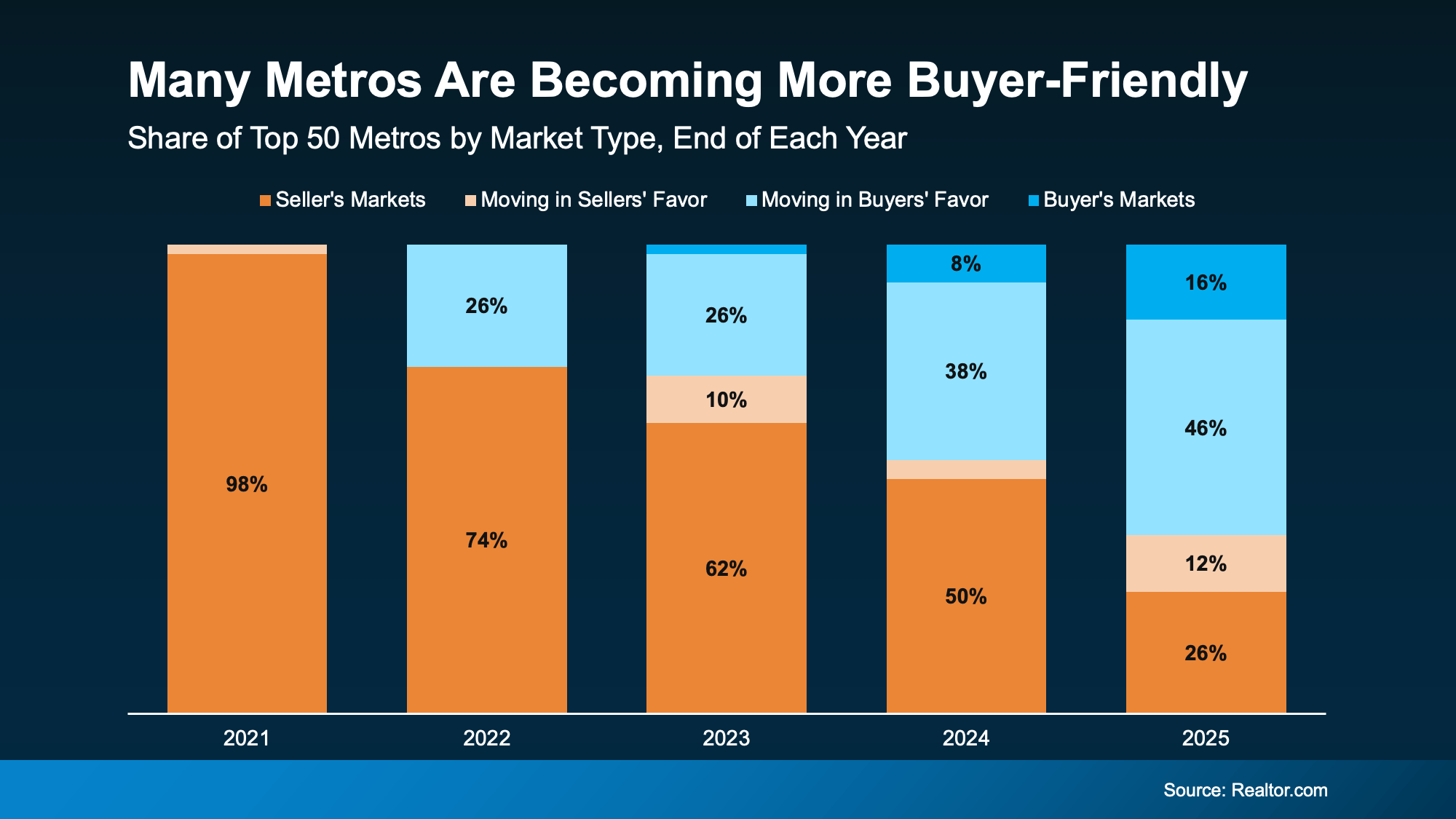
And that changes how the market is going to feel for everyone. Sellers shouldn’t still expect 2021 conditions, but neither should buyers. At least, not generally speaking.
It’s Not the Same Story Everywhere
That said, who has the power ultimately depends on where you live. While more metros are leaning buyer-friendly lately, there are still plenty of strong seller's markets right now, too.
It really comes down to how much housing supply and demand there is in your area. And that varies enormously by region.
Sun Belt cities like Austin, Tampa, and San Antonio saw major building booms in recent years, giving buyers more options and more negotiating room. Meanwhile, cities in the Northeast and Midwest – think Rochester, Hartford, and Buffalo – didn't see that same wave, so inventory stayed tight and competition stayed fierce. As Jeff Ostrowski, Housing Analyst at Bankrate, explains:
“The formerly hot Sun Belt markets have cooled, while the Northeast and Midwest have stayed hot. The big driver here is construction activity. The softest markets now [have] experienced big booms that spurred new building, and that has led to a large supply of new and existing homes on the market in those places.”
Practical Advice for Your Move
To find out who has the power in your local market, talk to an agent. Because knowing what’s happening locally is going to be the key to setting the right strategy for your move.
If the market is working in your favor, great. Lean in and use it to your benefit. But if it’s not, all hope isn’t lost. Your agent can help you figure out how to approach any market.
Here's some practical advice if there’s a mismatch between your goal and local market conditions.
If you're buying in a seller's market:
-
Get pre-approved before you start shopping. It shows sellers you're serious.
-
Be ready to act fast when the right home hits the market.
-
Consider offering a quick closing date or flexible terms.
-
Work closely with your agent to craft a competitive offer.
If you're selling in a buyer's market:
-
Price it right from day one. Overpricing will cost you time and money.
-
Focus on curb appeal and staging to stand out in areas with more inventory.
-
Be open to offering incentives, like covering closing costs or a home warranty.
-
Expect buyers to negotiate and be ready to be flexible.
Bottom Line
Right now, local markets are moving in very different directions. And your strategy as a buyer or seller should reflect your market.
Want to know which way our local market is leaning and what that means for your move? Let's connect.
June 17, 2026
Think Home Prices Will Crash? Here's What the Experts Actually Expect.
Think Home Prices Will Crash? Here's What the Experts Actually Expect.

One of the biggest reasons buyers are still sitting on the sidelines is because they think home prices are going to come down.
-
Some believe a crash is coming and they'll get a better deal if they hold off.
-
Others worry they'll buy now and watch their home's value fall later.
And nobody wants to overpay or buy right before values drop. But here's the question worth asking:
What if the crash you're waiting for isn't actually coming?
Because that's what the latest data suggests.
Experts Are Not Calling for a Crash
If you've spent any time online lately, you've seen posts claiming home prices are about to come crashing down. And it's true that some markets are seeing small price declines right now.
But that's not the same thing as a nationwide crash.
While some places are going through a price adjustment, Realtor.com data shows home prices are still rising in 71% of housing markets across the country.
The trouble is, since negative news sells, you’re seeing more coverage about how a handful of markets are seeing declines, than how the majority are still seeing prices rise. And that's unfortunate.
It's exactly why a lot of buyers end up with the impression that prices are falling everywhere when they’re not. So how do you really know where prices are really headed from here?
That's where the Home Price Expectations Survey (HPES) from Fannie Mae comes in.
Home Prices Will Rise for the Next 5 Years
Every quarter, more than 100 economists, housing experts, and market analysts are asked where they think home prices are headed based on the latest data available.
And despite all the uncertainty in today's market, there’s one thing they largely agreed on:
They don't think a crash is coming.
In fact, the average of all of their forecasts calls for home prices to rise every year for at least the next 5 years (see graph below):
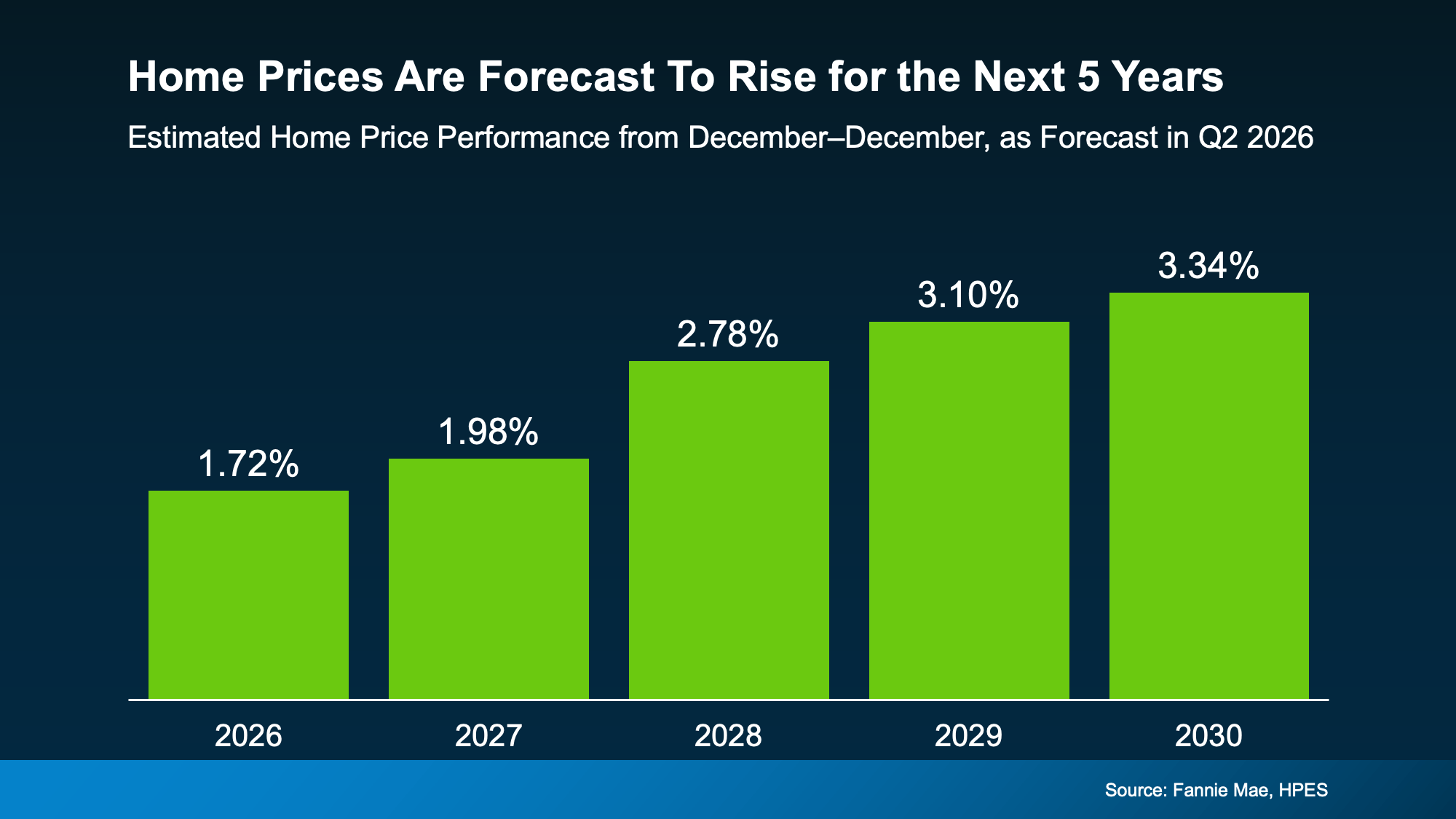
The point is that the overwhelming expectation isn't for prices to fall. It's for prices to rise at a more normal pace. And just in case you're looking at the forecasts and saying: “of course they’d say that” – know that this survey doesn't just include optimists. It includes pessimists too.
Even the Pessimists Aren't Predicting a Crash
Researchers broke the panel into groups based on how bullish or bearish they were about housing. The result? Even the most pessimistic group still expects home prices to climb over the next five years.
Optimists think we’ll see prices go up roughly 4% a year. Pessimists say it’ll be closer to 1%. The reality may be somewhere in the middle.
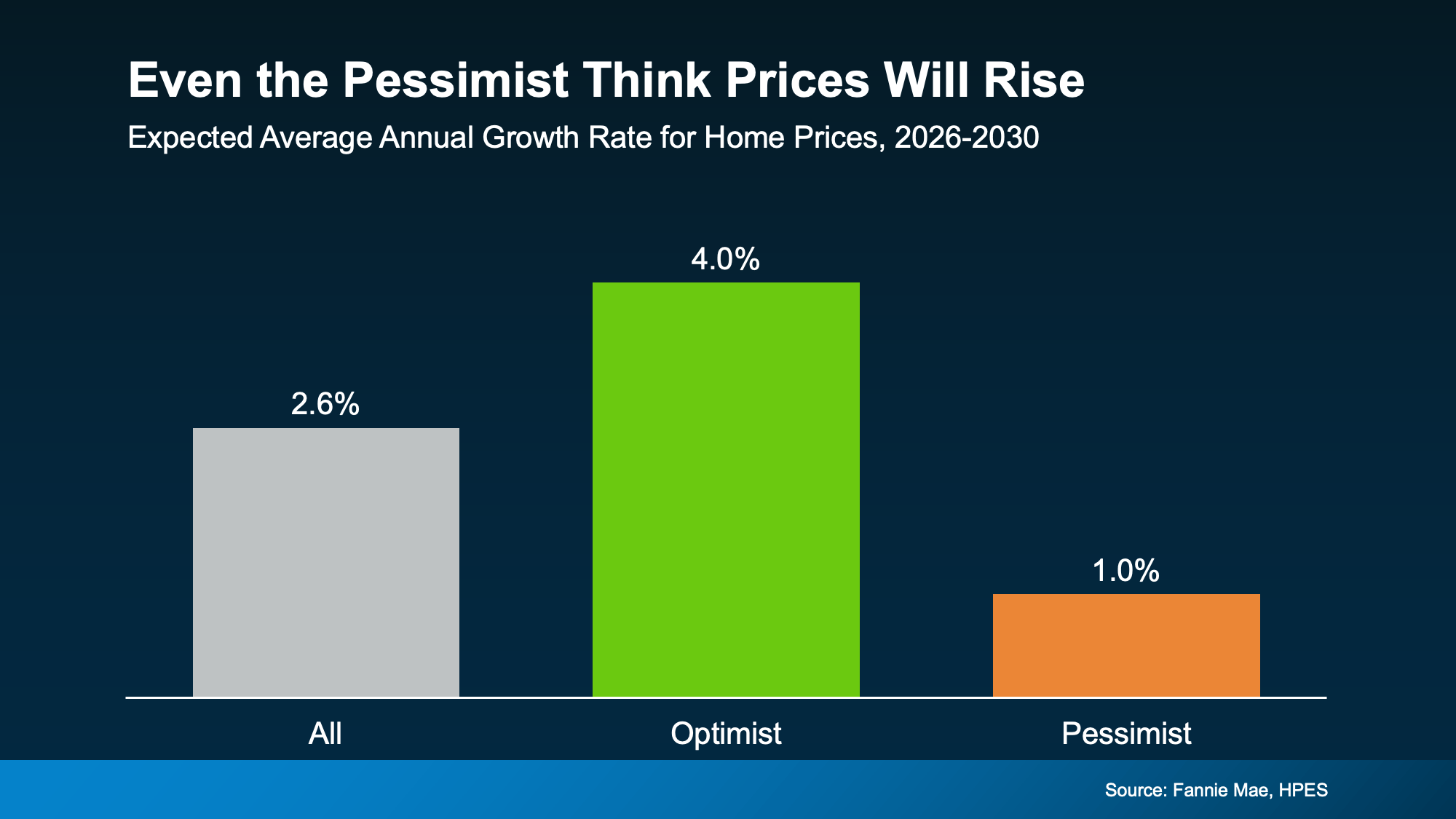
Think about that for a second. The debate among experts isn't whether prices will crash. It's how much they'll rise.
That's a very different conversation than the one happening across social media.
This Means Waiting Could Actually Cost You
So, if you're putting off your move until prices come down, you may be disappointed. According to the experts, a widespread crash isn’t in the cards.
In fact, based on the HPES forecast, a buyer who purchased a $400,000 home this January would gain nearly $40,000 in equity over the next five years from appreciation alone, even in this more moderate market (see below):
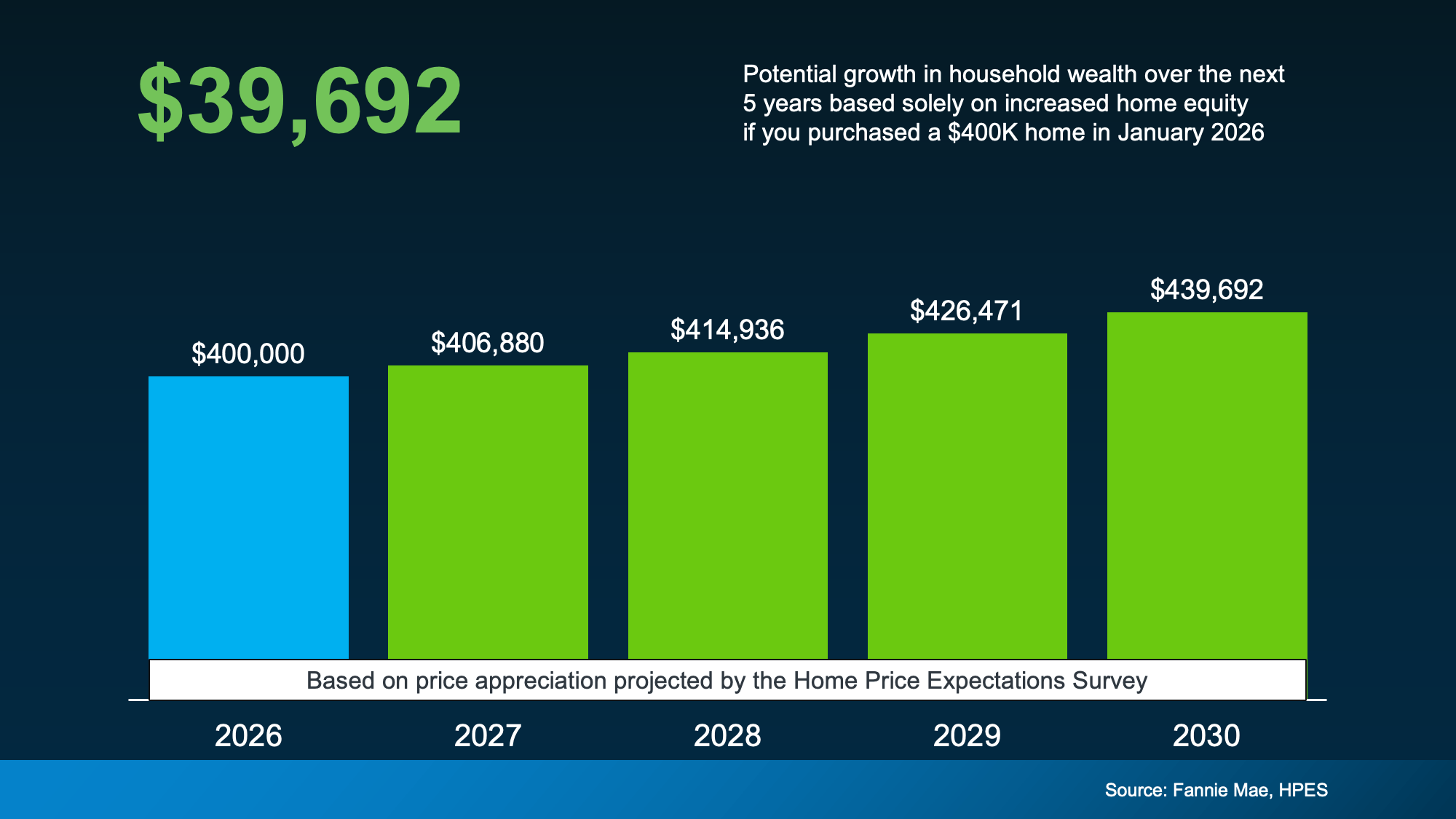
Of course, this all depends on local market conditions. This forecast is a national average. But broadly speaking, if the experts are right, the bigger risk isn't that prices will crash. It may be waiting for a crash that never comes.
Because depending on your market, if you wait, you could be missing out on $40k in equity or paying 40k more in 5 years for the same house.
Bottom Line
A lot of buyers are waiting because they think prices will fall, but that’s not what the experts are saying.
If you're trying to decide whether waiting still makes sense, let's connect. That way you understand what's happening in our local market and what it could mean for your plans.
June 16, 2026
Should You Pay for Your Buyer’s Closing Costs? What Sellers Need To Know.
Should You Pay for Your Buyer’s Closing Costs? What Sellers Need To Know.

A few years ago, sellers could get away with saying "no" to just about everything.
No repairs.
No concessions.
No negotiation.
If buyers wanted the house, they pretty much had to take it on the seller's terms. But now that inventory’s grown, negotiations are becoming a normal part of the process again.
That's why one of the most important things sellers need to understand right now is this:
The goal isn't to “win” every negotiation.
Sometimes, it’s worth meeting buyers where they are to get a deal done, fast. One example? Helping with a buyer's closing costs.
Let’s break that down, so you know what to expect if it comes up in your sale.
What Are Buyer Closing Costs?
Closing costs are the extra expenses buyers pay on top of their down payment when they purchase a home. Freddie Mac gives some examples:
-
Loan origination fees
-
Appraisal and inspection costs
-
Title and attorney fees
-
Survey fees and more
Typically, buyer closing costs range from about 2% to 5% of the home’s purchase price. So, on the typical $400,000 home, that could mean anywhere from $8,000 to $20,000 out of pocket.
And in today’s affordability-challenged market, that upfront cash can be a major hurdle for some buyers – even if they can comfortably afford the monthly mortgage payment itself.
That’s why more people are asking sellers for help.
And More Sellers Are Saying “Yes”
According to the latest data from Zillow, 67% of sellers reported paying some or all of the buyer’s closing costs in 2025 (see chart below):
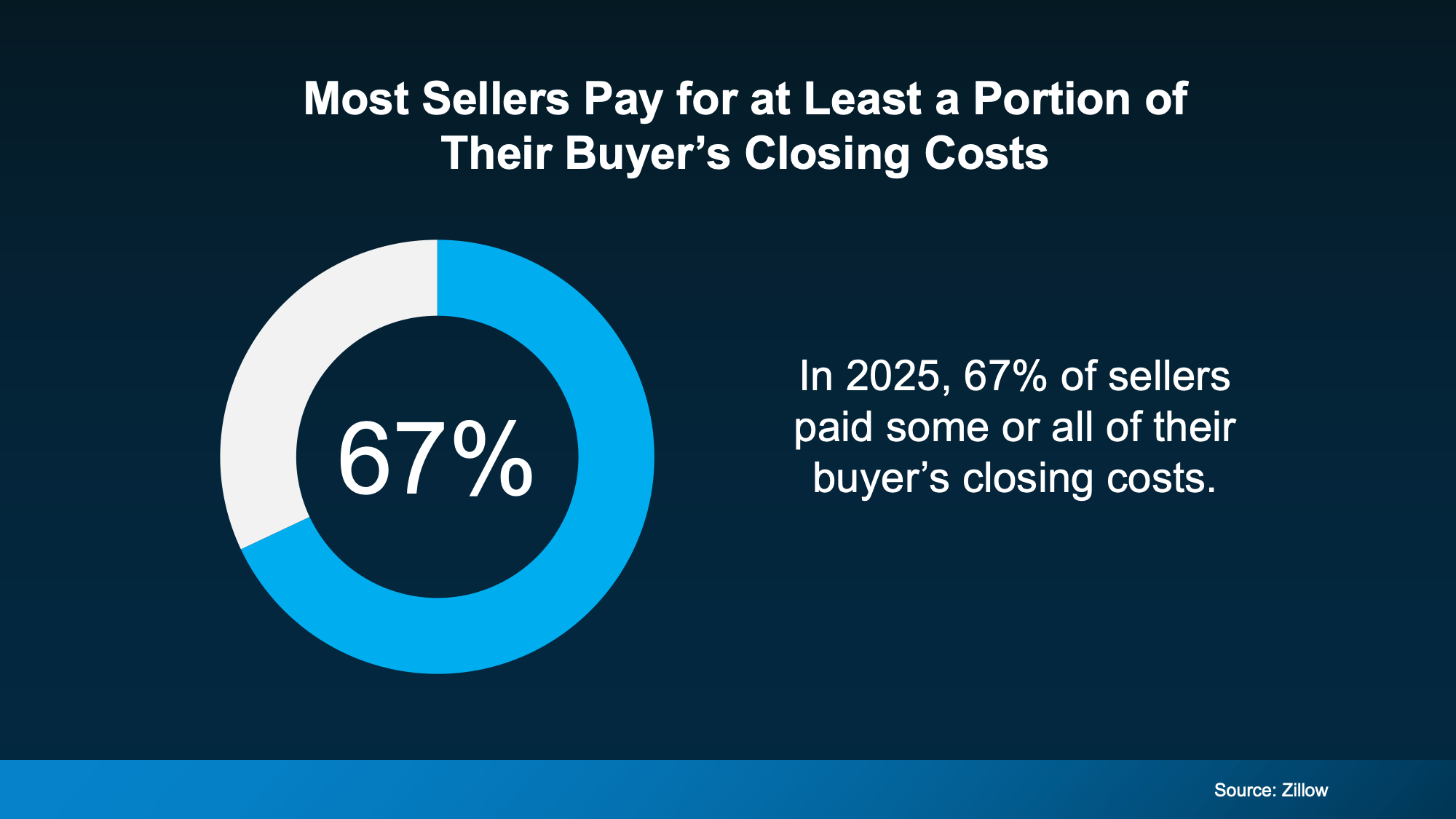
Now, that doesn't mean every seller is doing it. And it definitely doesn't mean every seller should. But it does show how common concessions have become as the market has shifted. And that’s important for you to know.
When Paying Closing Costs May Make Sense
This is where many sellers get stuck. They hear "help with closing costs" and immediately think: "Why should I pay for their expenses?"
But that's not always the right way to look at it. You’ve got to consider who has the leverage in today’s market.
Redfin data shows there are more sellers than buyers active today. And that shifts the market dynamics (see graph below):
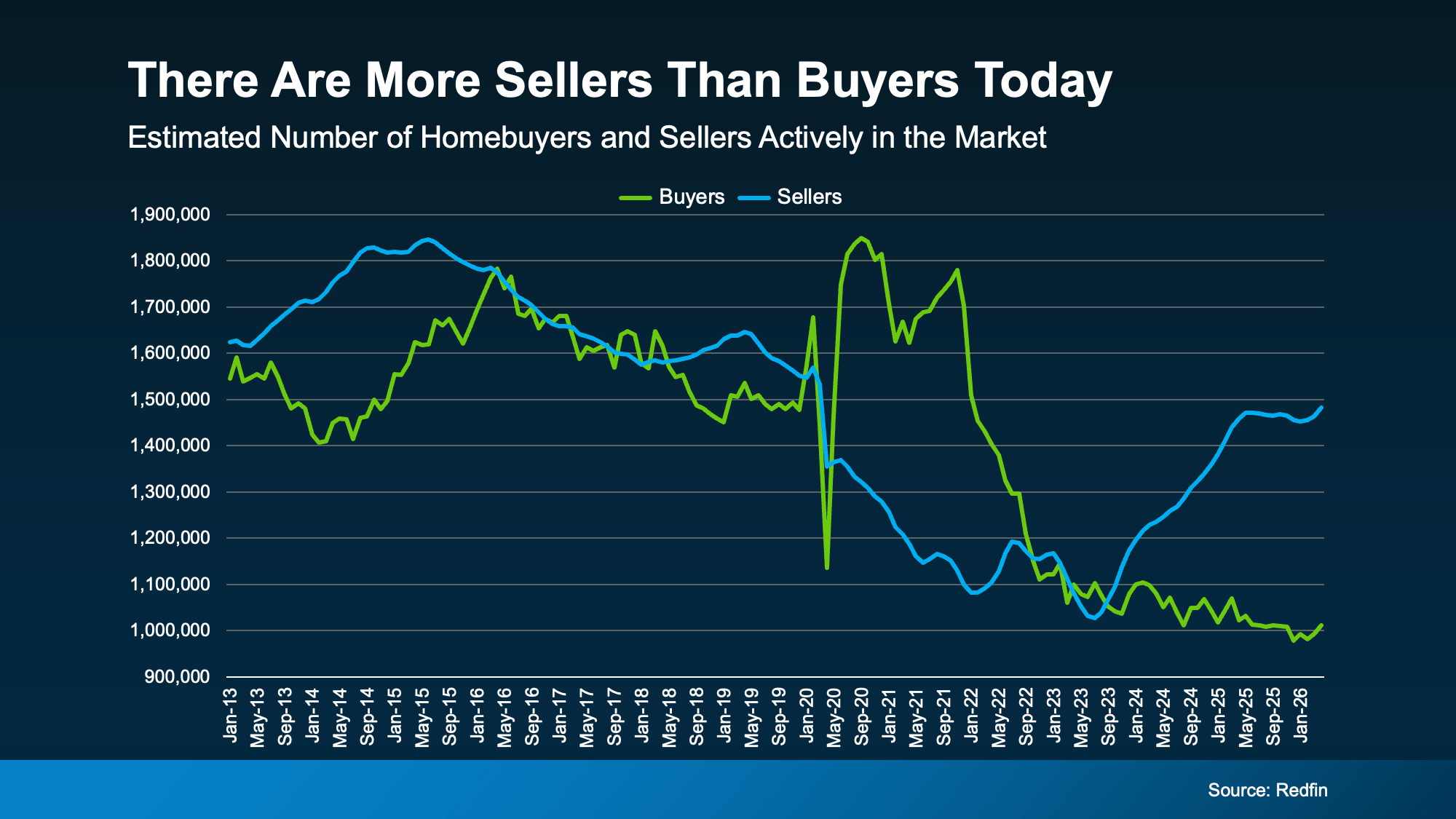
That doesn't mean every market favors buyers. Far from it. In some areas, homes are still selling quickly and sellers have plenty of leverage. But in others, buyers have more room to negotiate than they've had in years.
That's why local market conditions matter so much when you make your decision.
For example, helping with closing costs may be worth considering if:
-
There are a lot of homes for sale in your area
-
Your house has been sitting on the market longer than expected
-
You’ve had showings, but no offers
-
You’re motivated to move quickly
-
Or you’re trying to keep a deal together during negotiations
After all, if it’s the thing that helps bring a serious buyer across the finish line, it could be well worth it.
Other Concessions You Could Offer Instead
Just remember, being flexible doesn’t mean saying “yes” to every request. It means understanding which compromises actually help you accomplish your goals. Because there are always alternatives.
Redfin suggests considering other concessions if you’re not interested in helping with closing costs, like:
-
A home warranty
-
Repair credits
-
Flexible closing dates, or
-
Leave behind appliances or furniture
The right answer depends on what buyers in your market are asking for and what matters most to you. That's exactly why working with an experienced local agent is so important.
Bottom Line
The sellers having the most success today are the ones who understand the market has changed and are adapting to meet it where it is.
Sometimes that means negotiating on closing costs. Sometimes it means offering something else. The key is knowing which concessions are worth it for our local market.
If you’re wondering what's normal in our area, what's worth negotiating, and where it makes sense to stand firm, let’s connect.